
The Jeep Lifestyle and the Aging Fleet
The Jeep Wrangler is more than just an SUV; it is an American cultural icon. Built on a rugged, body-on-frame chassis with solid front and rear axles, the Wrangler is designed to conquer the toughest off-road trails in the world. Its enduring popularity is undeniable, with Jeep delivering an impressive 167,322 Wranglers in 2025 alone, representing an 11% increase from the previous year.
However, the reality of modern vehicle ownership in the United States is shifting. In 2025, the average age of light vehicles hit a record 12.8 years, driven by consumers holding onto their cars longer due to elevated new vehicle prices and high interest rates—which average 7.2% for new loans. For light trucks and utility vehicles like the Wrangler, the average age sits at a sturdy 11.9 years.
Jeep owners are historically some of the most dedicated and capable DIY mechanics in the automotive car parc. As millions of JK and JL generation Wranglers enter the aftermarket 'sweet spot' (the six-to-fourteen-year window), owners are facing a wave of required maintenance. To stay ahead of these failures, implementing a proactive maintenance strategy is essential for preventing small steering issues from becoming dangerous highway failures.. While the Wrangler's solid-axle design makes it an off-road beast, it also introduces unique mechanical flaws that independent front suspension vehicles simply do not have. This comprehensive guide breaks down the two most notorious Jeep issues—the "Death Wobble" and TIPM electrical failures—and outlines the exact aftermarket parts you need to conquer them.
Anatomy of the "Death Wobble"
If you own a solid-axle Jeep, you have likely either experienced the "Death Wobble" or live in fear of it. It is the single most discussed topic in the Jeep community.
What is it? The Death Wobble is a violent, terrifying shaking of the front end and steering wheel that typically occurs at speeds above 45 mph after hitting a bump, pothole, or bridge expansion joint. The vibration creates a harmonic resonance in the solid front axle that amplifies rapidly. It feels as though the front wheels are going to tear themselves off the vehicle, and the only way to stop the violent shaking is to drastically reduce your speed and pull over to the shoulder.
It is crucial to understand that the Death Wobble is not a single broken part; it is a symptom of accumulated wear across your front steering geometry. When multiple components develop slight play, the solid axle is allowed to oscillate out of control.
The Three-Step Death Wobble Cure
Curing this issue requires a systematic upgrade of your front-end components. Simply throwing parts at a Jeep without diagnosing the root cause will result in wasted money. Here is the definitive upgrade path:
1. The Primary Suspect: Upgrading the Track Bar
The track bar is a massive steel rod that connects the front axle to the vehicle's frame, preventing the axle from shifting side-to-side during cornering. It is almost always the primary culprit of the Death Wobble. Over time, the rubber bushings at the ends of the factory track bar wear out, or the mounting hole on the axle bracket becomes "wallowed out" (oval-shaped) from the immense stress.
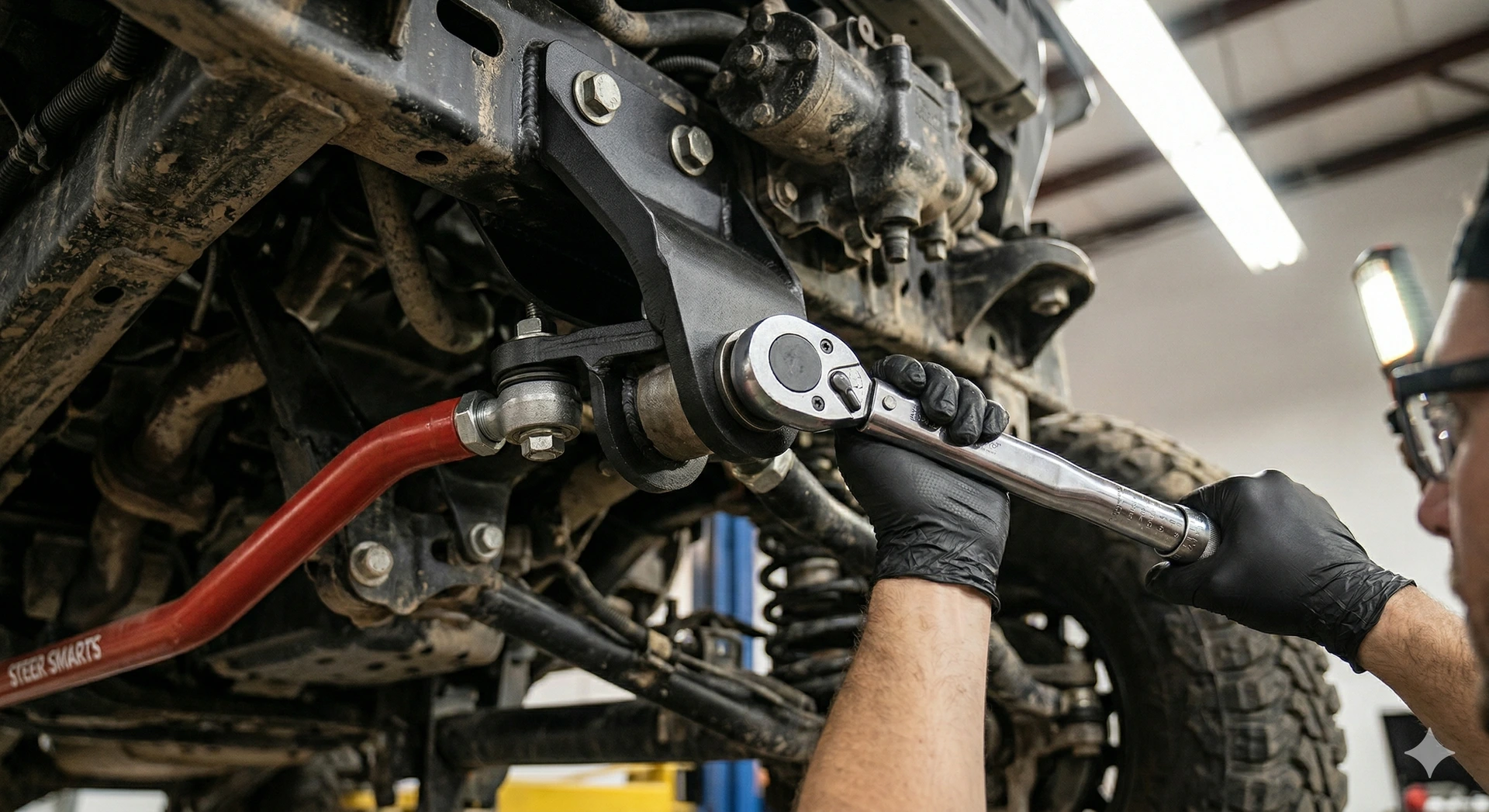
The Fix: You must replace the flimsy factory track bar with a Heavy-Duty Forged Adjustable Track Bar. These aftermarket bars use massive, high-durometer polyurethane bushings or spherical joints that eliminate lateral axle movement. If your mounting bracket is damaged, you will also need to weld on a reinforced track bar brace.
2. The Hidden Culprit: Ball Joint Upgrades
If your track bar is tight but the wobble persists, your ball joints are likely failing. The Wrangler's factory ball joints are notorious for utilizing plastic internal liners that crush and wear down over time, especially if you have installed larger, heavier aftermarket tires.
The Fix: Jeep owners actively search for Heavy-Duty Ball Joint Upgrades to mitigate this issue. Premium aftermarket brands offer metal-on-metal, greasable ball joints. These are significantly stronger than factory units, can easily handle the stress of 35-inch mud-terrain tires, and will last the lifetime of the vehicle if greased during regular oil changes.
3. The Final Dampener: Heavy-Duty Steering Stabilizers
There is a massive misconception in the Jeep community that a bad steering stabilizer causes the Death Wobble. It does not. A steering stabilizer is essentially a horizontal shock absorber for your steering linkage. If you install a new stabilizer without fixing the track bar or ball joints, it will mask the wobble for a few months before blowing out entirely.
The Fix: Once your suspension geometry is perfectly tight, installing an upgraded Heavy-Duty Steering Stabilizer (or a dual-stabilizer kit for lifted Jeeps) is the final step to dampen residual road vibrations and protect your steering box from off-road impacts.
Demystifying the TIPM Electrical Nightmare
While the suspension handles the trails, the electrical system in the Wrangler (specifically 2007-2018 models) is plagued by a notorious component: the Total Integrated Power Module, or TIPM.
The TIPM is essentially the central nervous system of your Jeep. It functions as the primary fuse box, but it is also a highly complex computer board containing micro-relays that control everything from your fuel pump and horn to your windshield wipers and transmission.
Because these micro-relays are soldered directly onto the internal circuit board, they cannot be easily swapped out like a traditional fuse when they fail.
Symptoms of a Failing TIPM
Electrical issues related to the TIPM are a major theme in consumer automotive discourse. Symptoms of a failing module are incredibly frustrating and can leave you stranded:
The "No-Start" Condition: The vehicle cranks normally but refuses to start, or it stalls unexpectedly while driving at highway speeds. When these electrical gremlins appear, you must diagnose engine misfires like a pro to determine if the issue is a burned-out TIPM relay or a simple breakdown in the ignition cycle. This is almost always caused by a burned-out fuel pump relay inside the TIPM.
The "Poltergeist" Effect: The Jeep exhibits erratic headlight and wiper behavior, the horn honks on its own, or the doors lock and unlock without human input.
Battery Drain: The fuel pump relay gets stuck in the "on" position, continuing to pump fuel even after the key is removed, completely killing your 12V battery overnight.
How to Fix TIPM Flaws
Dealerships will quote you upwards of $1,200 to replace the entire TIPM assembly. However, the proactive aftermarket has developed far more cost-effective DIY solutions: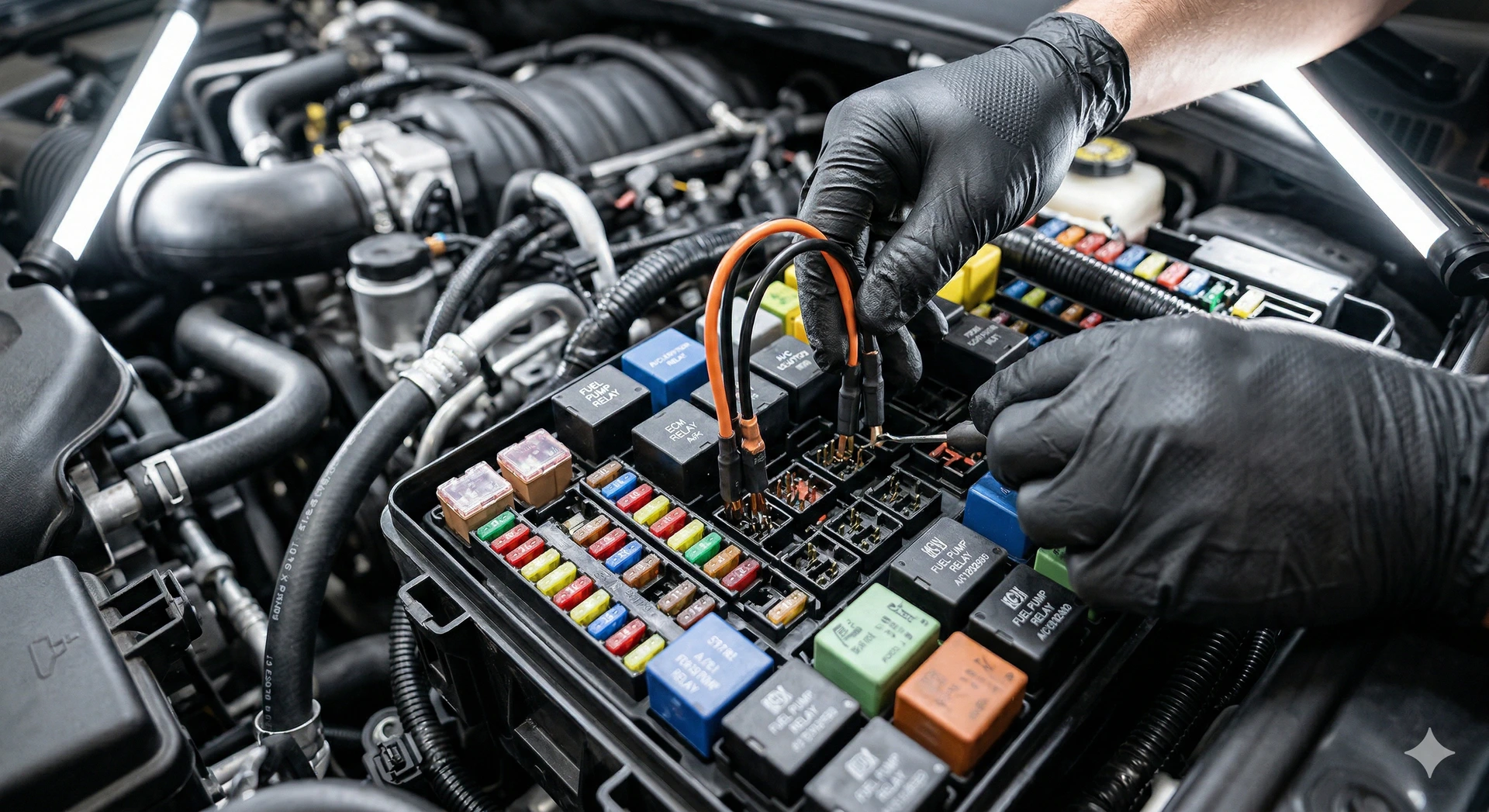
The TIPM Bypass Cable: If your only issue is the fuel pump relay (the most common failure), you can purchase a specialized TIPM Bypass Cable. This $20 wire kit plugs into existing, unused fuse slots to bypass the dead internal relay and draw power from a healthy circuit. It takes five minutes to install and permanently solves the no-start issue.
Rebuilt TIPMs: If your Jeep is suffering from the "Poltergeist Effect" (wipers and headlights acting erratically), the entire board is compromised. In this case, you can purchase a remanufactured, reinforced TIPM from specialized aftermarket companies. These rebuilt units feature upgraded, heavy-duty relays that resolve the factory flaws for a fraction of the dealership price.
Regional Maintenance: Protecting the Chassis
Because the Wrangler is built on a heavy steel frame, it is particularly susceptible to regional environmental damage. In regions like the Northern Plains and the "Rust Belt," where harsh winters require heavy road salt usage, vehicles age significantly faster.
Jeep frames are notorious for rotting out near the rear control arm mounts and the skid plate. If you live in a rust-prone state, investing in annual Underbody Undercoatings is mandatory. Applying a lanolin-based rust inhibitor (like Fluid Film) inside the frame rails and over the exposed suspension components will chemically stop existing rust and repel corrosive saltwater, adding years of life to your aging chassis.
DIY Diagnostics: Reading the Codes
When tackling complex electrical issues like TIPM failures or engine misfires, flying blind is a recipe for disaster. Because the average vehicle age is rising, relying on a dealership to read a simple diagnostic code is no longer economically viable.
Investing in a high-quality OBD2 scanner is an essential part of Jeep ownership. The Innova 5610 is an excellent choice for intermediate DIYers, offering advanced bi-directional control that can command TIPM functions (like manually turning on the cooling fan or wipers) to verify electrical faults. For casual owners looking for a wireless option, the BlueDriver Pro pairs with your smartphone and offers a massive database of verified fixes specific to Jeep models.
Conclusion: Conquering the Trails Ahead
The Jeep Wrangler was built to be modified, repaired, and abused. While the Death Wobble and TIPM failures can be incredibly intimidating, they are well-documented flaws with permanent aftermarket solutions. By upgrading your hardware and actively protecting your chassis from rust, you can ensure your Wrangler continues to conquer both the highway and the trails well past the 200,000-mile mark. However, don't let your high-performance parts down by falling for the great lubricant illusion; always choose differential and engine fluids that exceed the requirements of your modified drivetrain.
Recommended Amazon USA Products for Your Jeep Wrangler
(Note: As specific Amazon ASINs frequently change, the secure links below will direct you to the exact search queries to find the current best, top-rated listings for these specific Jeep upgrades).
Heavy-Duty Adjustable Forged Track Bars (The #1 Cure for the Death Wobble)
Heavy-Duty Metal-to-Metal Ball Joint Sets (Essential for Big Tires)
Upgraded Steering Stabilizers & Dual Kits (Dampens Highway Vibrations)
TIPM Bypass Cables (Fixes Fuel Pump Relay No-Start Issues)
Innova 5610 Bi-Directional OBD2 Scanner (Best Diagnostic Tool for Jeep Electrical Issues)
Fluid Film Rust Inhibitor (Mandatory Undercoating for Rust Belt Jeeps)
As an Amazon Associate, GE for Trading earns from qualifying purchases. This means we may receive a small commission at no extra cost to you if you use the links below to support our expert research.