
Modern vehicles increasingly rely on turbocharged engines to deliver a highly sought-after balance of impressive power and strict fuel economy. While these engineering marvels dramatically increase engine efficiency, they operate in extreme environments. A turbocharger uses exhaust gases to spin a small turbine wheel connected by an axle to a compressor wheel. This means the turbocharger sits squarely between the blistering heat of the engine's exhaust and the intake system, taking advantage of energy that usually runs out the tailpipe.
Because the compressor wheel can reach staggering speeds—sometimes up to 350,000 RPM—even the slightest imbalance or imperfection can lead to catastrophic failure. Therefore, regular maintenance and visual inspections of the compressor housing and its internal blades are absolutely essential to ensure peak performance and avoid costly repairs.
Whether you are a seasoned automotive enthusiast or a driver wanting to better understand your vehicle's mechanics, this comprehensive guide will walk you through exactly how to inspect your turbocharger's compressor housing and blades, what warning signs to look for, and how to protect your engine.
Understanding the Compressor's Role in a Turbocharger
To effectively inspect a turbocharger, you must first understand how the compressor side functions. A turbocharger is broadly divided into a "hot side" (the turbine) and a "cold side" (the compressor).
The hot side captures the power of the engine's exhaust gases to spin a shaft. This shaft is directly connected to the cold side compressor wheel, which takes that rotational energy and uses it to draw in fresh air, compress it, and force it back into the engine's combustion chambers. Because this compressed air contains significantly more oxygen than uncompressed air, the engine can burn more fuel and generate substantially more power.
Within the turbocharger assembly, there are three main areas of pressure: the compressor, the turbine, and the Center Housing Rotating Assembly (CHRA). The compressor and turbine wheels are intricately designed to allow pressure to build up behind them, which helps keep lubricating oil from leaking out of the CHRA. If the pressure inside the CHRA exceeds the pressure in the compressor housing, however, oil may leak past the sealing rings.
Step-by-Step Compressor Housing and Blade Inspection
When inspecting your turbocharger, the compressor housing is usually the most accessible component, as it connects directly to your vehicle's air intake system. Follow these critical steps to perform a thorough evaluation.
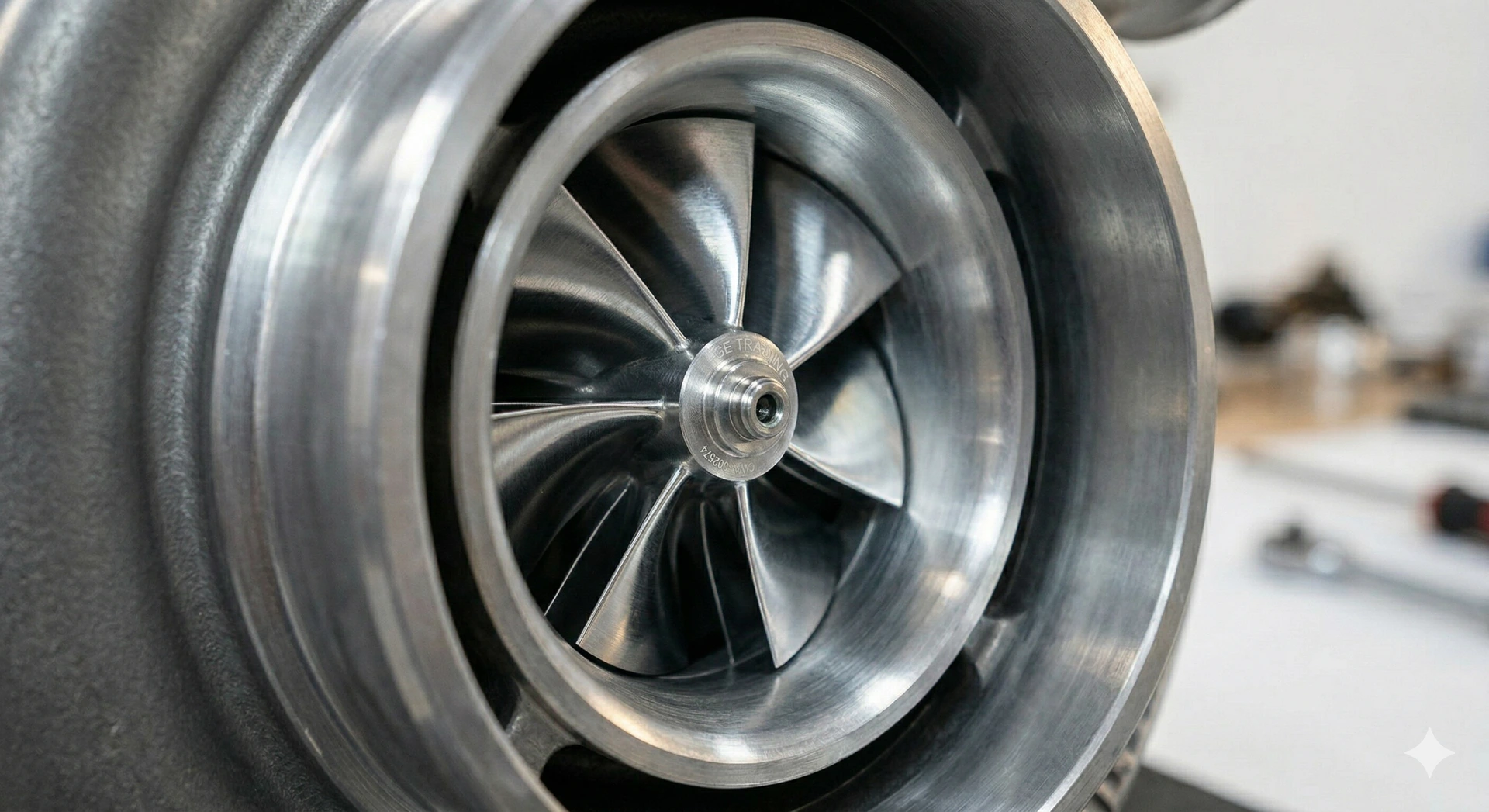
Step 1: Safety and Preparation
Always practice good safety behaviors when working on motor vehicles. Ensure the engine is completely cold before beginning your inspection, as nearby exhaust components can cause severe burns. You will need to remove the air intake boot or piping that connects the air filter box to the front of the turbocharger compressor housing. Ensure that no dirt, dust, or tools fall into the exposed turbocharger inlet during this process.
Step 2: Visual Inspection of the Housing Interior
With the compressor wheel exposed, shine a bright flashlight into the housing. The inner walls of the aluminum compressor housing should be clean, smooth, and free of deep scratches.
Oil Pooling: If you see a heavy coating of oil inside the housing, you may have a failing compressor seal, or the pressure inside your CHRA has exceeded the compressor housing pressure. Excessive blow-by from the engine's crankcase ventilation system can also deposit oil here.
Scoring and Rubbing: Look closely at the walls immediately surrounding the compressor blades. If you see circular scoring or scratch marks, the rapidly spinning compressor wheel is making physical contact with the housing. This usually indicates that the internal shaft bearings have worn out, allowing the shaft to wobble (known as "shaft play").
Step 3: Inspecting the Compressor Blades
The compressor blades (or fins) are precision-machined. Even microscopic damage can throw the wheel off balance at high RPMs.
Foreign Object Damage (FOD): Look for chips, nicks, or jagged edges on the leading edges of the blades. Foreign objects, such as outside debris, nuts, bolts, or damaged engine internals, are a sure way to destroy a turbocharger. A dirty or clogged air filter can also allow abrasive dirt and debris into the system, slowly wearing away and damaging the compressor blades over time.
Bending and Warping: Check if any of the blades look bent out of shape. This can disrupt the aerodynamics of the wheel, drastically reducing compressor efficiency and causing the turbo to overspeed to meet boost demands.
Step 4: Checking for Shaft Play
Reach into the housing (ensure the vehicle is off and the battery is disconnected for safety) and gently pinch the nut at the center of the compressor wheel.
In-and-Out Play: Gently push and pull the shaft along its axis. There should be virtually zero perceptible movement.
Side-to-Side Play: Wiggle the shaft side-to-side. A microscopic amount of radial play is normal on certain journal-bearing turbochargers (as they rely on oil pressure to center the shaft), but if the wheel can move enough to physically touch the compressor housing, the turbocharger requires an immediate rebuild or replacement.
The Dangers of Compressor Surging and Overspeeding
During your inspection, it is important to consider the operating limits of your turbocharger. Most factory turbocharged vehicles utilize small-frame turbochargers to meet emissions standards and offer quick response. However, this push for quick response has drawbacks regarding longevity.
Every turbocharger compressor has a "choke point," which is associated with its maximum safe shaft speed. As the turbocharger reaches or surpasses this choke point, the compressor's efficiency drops drastically, and the chances of turbocharger overspeed become very high. Upgrading to larger compressor wheels can sometimes remedy this, but manufacturers face spacing constraints. To combat these issues, some aftermarket setups use anti-surge compressor housings or ported compressor shroud covers. These specialized housings can help increase airflow by up to 30 percent and significantly reduce damaging compressor surging.
Preventative Maintenance
The best way to protect your compressor housing and blades is through rigorous preventative maintenance.
Air Filter Maintenance: Always ensure you have a clean, high-quality air filter installed while the engine is running. Replacing the filter regularly ensures proper airflow and prevents blade-destroying debris from entering the housing.
Oil Changes: Turbo bearings spin at incredible speeds and rely on clean oil for lubrication and cooling. Use high-quality synthetic oils designed for turbo engines, as they resist thermal breakdown under extreme heat. Degraded oil can lead to premature bearing wear, which eventually causes the compressor wheel to crash into the housing.
Proper Warm-Up and Cool-Down: Avoid revving a cold engine, as this forces the turbo to spool without adequate lubrication. Likewise, after spirited driving, let the engine idle for a minute or two to allow the turbo to cool down, preventing oil from "coking" and damaging the internals.
Summary Inspection Checklist
Inspection Area | What to Look For | Potential Causes / Issues |
Housing Interior | Pooling oil, heavy sludge, or dirt. | Failing seals, excessive crankcase blow-by, or dirty air filter. |
Housing Walls | Circular scratches or scoring marks. | Worn bearings allowing the compressor wheel to rub the housing. |
Compressor Blades | Chips, nicks, or jagged leading edges. | Foreign Object Damage (FOD) from debris bypassing the air filter. |
Blade Geometry | Bent, warped, or missing fins. | Severe impact damage; causes massive imbalance and vibration. |
Shaft Play | Excessive side-to-side or in-and-out movement. | Bearing failure; warrants immediate turbocharger rebuild or replacement. |
Frequently Asked Questions (Q&A)
What is Foreign Object Damage (FOD) in a turbocharger? Foreign Object Damage occurs when outside debris, such as dust, rocks, or loose hardware, bypasses the air filter and gets sucked into the turbocharger. Because the compressor wheel spins at incredibly high speeds, even tiny particles can chip, bend, or completely shatter the aluminum compressor blades.
Why is there oil inside my compressor housing? A small, microscopic film of oil can sometimes be normal due to crankcase ventilation systems routing vapors back into the intake. However, heavy pooling of oil usually indicates that the internal sealing rings are failing, or that excessive pressure inside the center housing is forcing oil out into the compressor area.
What causes a compressor wheel to rub against the housing? Compressor wheel rubbing is caused by excessive "shaft play." This happens when the internal journal or ball bearings that support the turbocharger's main shaft wear out. When the bearings fail, the shaft wobbles, allowing the spinning compressor wheel to make destructive physical contact with the inner walls of the compressor housing.
Can I fix chipped compressor blades? No. Compressor wheels are precision-balanced to operate at speeds up to 350,000 RPM. If a blade is chipped or bent, the wheel is permanently compromised. Running a damaged wheel will cause severe vibrations that will instantly destroy the turbocharger's bearings. The entire compressor wheel must be replaced and the rotating assembly professionally re-balanced.