
Now, we have arrived at the final installment of our series: The Elixir of Life.Remember, premium additives are only as good as the oil they mix with. Make sure you are starting with the right foundation by checking out our ultimate motor oil showdown in Part 1: The Titans of Lubrication."
And if you want your daily gear shifts to be as smooth and protected as your freshly treated engine, don't miss our transmission fluid guide in Part 2: Shifting Gears.
Even the best engine oil needs a supporting cast. Today, we are looking at the specialized additives, engine flushes, and coolants that protect your engine from extreme temperatures, internal wear, and the silent killer of motors: sludge.
Let us see how our three titans engineer these vital protective fluids to keep your vehicle running forever.
1. Valvoline: The Coolant Customizer (Zerex)
While Valvoline produces reliable oil additives, they truly flex their engineering muscles in the coolant department. Through their Zerex brand, Valvoline is the #1 selling OEM-approved coolant in the industry, heavily campaigning against the idea of "universal" coolants [1].
Key Product Lines & Benefits
Zerex Customized Coolants (G05, G30, Dex-Cool): Instead of making a one-size-fits-all fluid, Valvoline engineers specific formulas—like Hybrid Organic Acid Technology (HOAT) for Mercedes and Ford (G05), or pure OAT for modern GM vehicles (Dex-Cool) [2, 3].
The Benefit: Valvoline's primary focus is defeating the four main causes of cooling system failure: corrosion, leaks, deposits, and freezing/boiling [1]. By using the exact chemical buffering agents required by specific manufacturers, Zerex prevents the degradation of delicate aluminum cooling system metals and stops silicate gel formation, ensuring your water pump and radiator stay completely clean and unobstructed [4].
The Verdict on Valvoline Protection: Skip the generic green jug. If you want absolute peace of mind that your engine block will not corrode from the inside out, Valvoline’s Zerex line offers precision-matched, manufacturer-approved cooling protection.
2. Liqui Moly: The Undisputed Kings of Additives
If you ask any European car enthusiast about aftermarket additives, Liqui Moly is almost always the first name mentioned. Because the company was founded entirely on the discovery of a friction-reducing additive, this category is their absolute specialty [5].
Key Product Lines & Benefits
Oil Additive (MoS2): This is the classic formula that started it all. By adding Molybdenum Disulfide (MoS2) to your oil, it forms a high-load, physical lubricating film on sliding metal surfaces. The benefit is a scientifically proven wear reduction of up to 50%, providing incredible emergency running properties for older engines [6].
Cera Tec: This is Liqui Moly's modern high-tech marvel. It acts as a 2-in-1 physical and chemical protector using micro-ceramic solid lubricants. The microscopic ceramic particles withstand extreme chemical and thermal loads, preventing direct metal-to-metal contact. The benefit is heavily reduced friction, noticeably quieter engine idling, increased fuel economy, and protection that lasts up to 50,000 km (30,000 miles) per treatment [7].
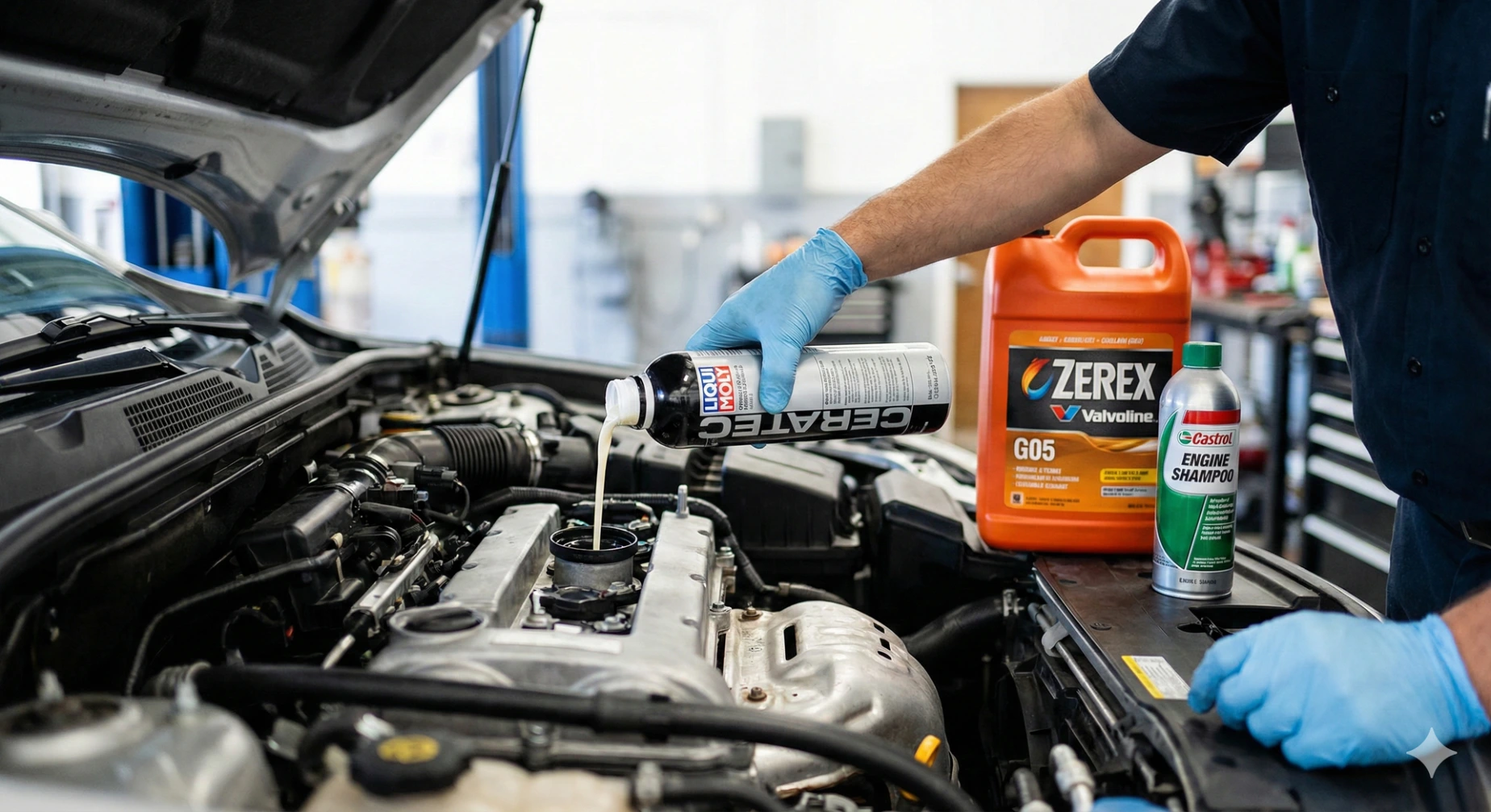
The Verdict on Liqui Moly Protection: Liqui Moly is the ultimate choice if you are looking to actively intervene in your engine's wear cycle. Whether treating an older, worn engine with MoS2 or protecting a brand-new, high-stress turbo engine with Cera Tec, their additives provide tangible, immediate results in engine smoothness.
3. Castrol: Targeted Sludge and Cavitation Control
Castrol approaches engine protection with a highly targeted, problem-solving mindset, focusing on two of the most destructive forces in modern engines: oil sludge and water pump cavitation.
Key Product Lines & Benefits
Castrol Engine Shampoo: Modern driving, especially stop-and-go commuting, creates combustion by-products that bake into thick layers of sludge. Castrol's Engine Shampoo is a powerful pre-oil-change flush. You pour it into your old oil and run the engine at idle for ten minutes. The benefit is that it safely breaks down and suspends heavy dirt and sludge, flushing it all out when you pull the drain plug, instantly restoring lost power and efficiency [8].
Radicool SF & Radicool Concentrate: Castrol’s premium engine coolants are specifically engineered to fight "cavitation"—a phenomenon where tiny bubbles implode with immense force against hot engine metals. Radicool's organic acid inhibitor technology (OAT) prevents this cavitation erosion and pitting, specifically on heat-rejecting aluminum surfaces behind exhaust ports [9, 10].
The Verdict on Castrol Protection: Castrol is excellent for targeted maintenance. If you bought a used car with an unknown service history, Castrol Engine Shampoo is the perfect detox. Furthermore, their Radicool coolants provide superior protection against the highly destructive force of cavitation in modern, high-heat aluminum engines.
Series Conclusion: The Right Brand for You
Across all three parts of our series, a clear philosophy emerges for each brand:
Valvoline is your high-mileage hero and preservation expert, offering heavily customized formulas to stop leaks, clear deposits, and keep aging vehicles on the road.
Liqui Moly is the enthusiast’s laboratory, offering unparalleled physical friction reduction, micro-ceramic armor, and precision fluids built for tight European tolerances.
Castrol is the liquid engineering shape-shifter, offering dynamic, adaptable molecules and targeted chemical flushes for drivers who face extreme pressure and heavy stop-and-go conditions.
Thank you for reading this series! Protect your engines, shift smoothly, and we will see you out on the road.
Engine Protection and Additives Compared
| Brand | Core Specialty | Key Technology | Flagship Product Line |
| Valvoline (Zerex) | Tailored, OEM-approved cooling system protection. | OAT / HOAT custom chemistry | Zerex G05, G30, Dex-Cool |
| Liqui Moly | High-tech anti-wear oil additives. | Micro-Ceramic Solid Lubricants | Cera Tec & MoS2 |
| Castrol | Targeted chemical flushes and anti-cavitation. | Pre-change Sludge Suspension | Engine Shampoo & Radicool |
Frequently Asked Questions (Q&A)
Are oil additives like Liqui Moly Cera Tec just "snake oil"?
While the auto aisle is full of gimmicks, Liqui Moly is an exception. Their additives are rigorously tested by independent laboratories in Germany. Cera Tec physically coats the engine internals with microscopic ceramics that withstand high heat, providing a verifiable reduction in metal-on-metal friction.
Can I mix different colors of engine coolant?
No! Never mix coolants based purely on color. Mixing an older inorganic coolant (IAT) with a modern organic coolant (OAT) can cause a chemical reaction that turns the fluid into a thick, destructive gel. This will clog your heater core and destroy your water pump. Always use the specific chemical makeup (like Zerex provides) that your manual dictates.
Is Castrol Engine Shampoo safe to use on an old, high-mileage engine?
Yes. Unlike harsh solvent-based flushes from decades ago that could break off massive chunks of sludge and clog oil pickups, Castrol Engine Shampoo uses a gentle, highly effective detergent. It dissolves and suspends the sludge safely in the old oil so it flows out easily when you drain it.
This comparison is part of our Engine Oil Master Guide in Egypt.
Best Additives
Check out what's new in our company !
References
[1] Valvoline Global Blog: Zerex Antifreeze Provides Customized Value vs Universal Coolant.
[2] Valvoline Product Data: Zerex G05 Antifreeze/Coolant.
[3] Valvoline Product Data: Zerex Dex-Cool Antifreeze/Coolant.
[4] Valvoline Product Data: Zerex G30 Antifreeze/Coolant.
[5] Liqui Moly Corporate: Battle against engine wear: Our oil additives in comparison.
[6] Liqui Moly Technical Data: Oil Additive (MoS2).
[7] Liqui Moly Technical Data: Cera Tec Micro-Ceramic Solid Lubricant.
[8] Castrol UK & Ireland: Castrol Engine Shampoo Product Specifications.
[9] Castrol Technical Data Sheet: Radicool SF Premix / Concentrate.
[10] Castrol Engineering Documents: Minimization of cavitation erosion in automotive cooling systems.