
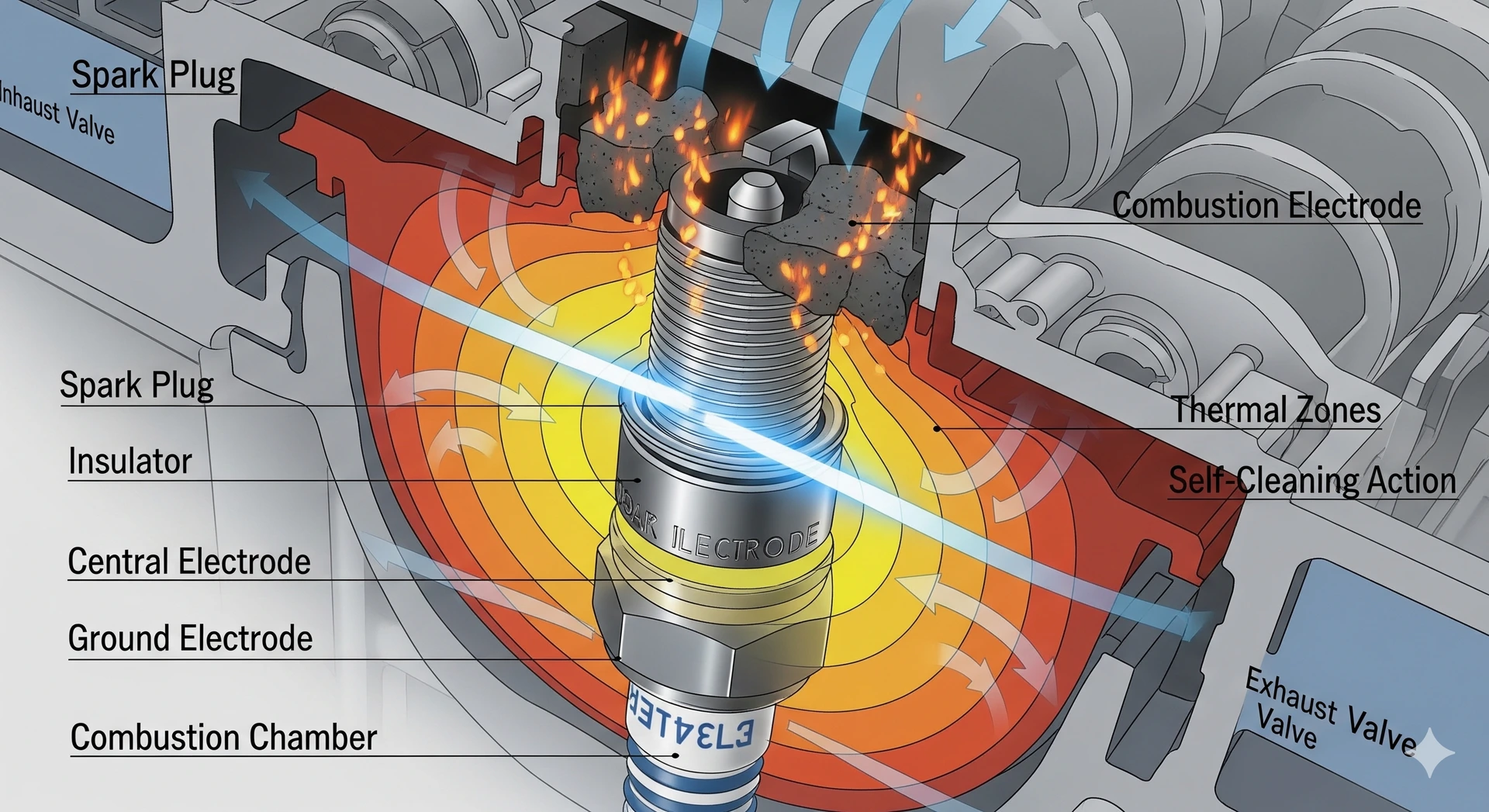
In the complex thermal ecosystem of an internal combustion engine, the spark plug serves a dual purpose that is often misunderstood by laymen and novice mechanics alike. While its primary function is to transmit high-voltage electrical energy to ignite the air-fuel mixture, its secondary function—acting as a precision heat exchanger—is equally critical for engine longevity and performance. This secondary function centers on a concept known as "self-cleaning." For a spark plug to operate effectively over thousands of miles, it must maintain a delicate thermal equilibrium, staying cool enough to prevent catastrophic pre-ignition while remaining hot enough to burn off combustion byproducts. This article explores the physics, design engineering, and operational parameters of the self-cleaning concept in modern spark plugs.
The Thermal Operating Window
To understand self-cleaning, one must first define the thermal boundaries within which a spark plug operates. Industry authorities, including NGK and Denso, define the optimal firing end temperature for a spark plug as falling between approximately 500 qne 850 Celsius. This is often referred to as the engine's thermal "Goldilocks zone."
The lower limit of this range, roughly 450 to 500 Celsius, is the self-cleaning temperature. During the combustion process, carbon is a natural byproduct. When an engine runs, particularly with a rich air-fuel mixture or during incomplete combustion phases like idling, free carbon is generated. If the spark plug’s ceramic insulator nose remains below 450 Celsius, these carbon deposits settle on the surface. Because carbon is conductive, extensive accumulation creates an electrical path of least resistance over the insulator nose to the metal shell, rather than jumping the gap to create a spark. This 'leakage' results in misfires, poor fuel economy, and starting difficulties. If you are experiencing these symptoms, you should learn how to diagnose engine misfires like a pro to determine if carbon fouling is the root cause before replacing your ignition components.
However, once the spark plug reaches the self-cleaning temperature threshold, the heat is sufficient to oxidize these accumulated carbon deposits, effectively burning them off and keeping the insulator clean. This passive maintenance system ensures that the plug retains its dielectric strength and firing efficiency without manual cleaning. Conversely, the upper limit 850 Celsius marks the danger zone. Exceeding this temperature can lead to overheating, where the ceramic insulator blisters and the electrodes melt, potentially causing pre-ignition—a destructive scenario where the fuel ignites from the hot spot before the timed spark occurs.
The Mechanics of Heat Range
The primary engineering variable that dictates a spark plug's ability to self-clean is its heat range. It is a common misconception that the heat range refers to the intensity of the spark or the electrical energy produced; rather, it is strictly a measure of the plug's ability to dissipate thermal energy from the combustion chamber to the engine's cooling system.
The physical architecture controlling this dissipation is the length of the insulator nose.
- Hot Plugs (Low Heat Range Numbers): These plugs feature a longer insulator nose. The extended length creates a longer distance for heat to travel before it reaches the metal shell and the cylinder head. Additionally, the longer nose exposes a larger surface area to the combustion gases, allowing the plug to absorb more heat. By retaining heat, "hot" plugs are designed to reach the self-cleaning temperature quickly, making them ideal for standard passenger vehicles that engage in low-speed driving, stop-and-go traffic, or short trips where the engine might otherwise fail to get hot enough to burn off carbon.
- Cold Plugs (High Heat Range Numbers): Conversely, cold plugs have a much shorter insulator nose. This short path allows for rapid heat transfer from the firing tip to the engine head and cooling system. These plugs are designed for high-performance engines and forced induction applications. Because these environments generate extreme internal heat, pairing the right cold plug with the best motor oil for turbocharged engines is the only way to prevent thermal breakdown and pre-ignition. In these scenarios, the engine naturally produces immense heat; a plug that retains too much heat would quickly surpass 850 Celsius and cause pre-ignition. The "cold" plug sheds heat fast enough to stay out of the pre-ignition zone but relies on the high engine load to generate enough heat to stay above the 450 Celsius self-cleaning threshold.
Selecting the correct heat range is a balancing act. A plug that is too cold for the application will never reach self-cleaning temperature, leading to carbon fouling (black, dry soot deposits). A plug that is too hot will clean itself efficiently but risks melting the electrodes and destroying the engine via detonation.
Material Science and Structural Innovations
While heat range is the macro-level control for self-cleaning, modern spark plug manufacturers have introduced micro-level design features to enhance this process.
1. Copper Core Technology: Standard material plugs and even precious metal plugs now typically utilize a copper core within the center electrode. Copper is a superior thermal conductor. By embedding copper inside the nickel alloy electrode, manufacturers can widen the thermal operating range of the plug. The copper core allows the plug to heat up quickly to reach the self-cleaning temperature while simultaneously preventing the tip from overheating under high-load conditions by conducting excess heat away efficiently. This prevents the "thermal runaway" that leads to melt-down.
2. Fine-Wire Electrodes (Iridium and Platinum): The introduction of precious metals like iridium and platinum has revolutionized self-cleaning. To see which of these materials is right for your specific driving style, see our detailed breakdown of Copper vs. Platinum vs. Iridium spark plugs. Iridium, with its extremely high melting point (2454 Celsius), allows for ultra-fine center electrodes, sometimes as small as 0.4mm. These fine electrodes reduce the "quenching effect," where the electrode itself absorbs the heat of the spark flame kernel. By reducing quenching, the flame kernel expands more rapidly and combusts the air-fuel mixture more completely. Complete combustion results in fewer carbon byproducts in the first place, thereby reducing the burden on the self-cleaning mechanism. Furthermore, the high density of the spark at the tip of a fine-wire electrode helps burn away local deposits more effectively than a wide, flat standard electrode.
3. U-Groove and Taper Cut Ground Electrodes: Innovations such as Denso's U-Groove ground electrode and tapered cuts are designed to expose more of the flame kernel to the air-fuel mixture. The U-Groove provides a channel for the spark to develop without being smothered by the electrode's mass. This improved ignitability ensures that even in leaner conditions or difficult starting environments, the fuel burns cleaner, leaving less soot (carbon) to foul the insulator.
Diagnostics: Reading the Self-Cleaning Signatures
Diagnostic analysis of a used spark plug is essentially an evaluation of its self-cleaning success. A plug that is operating correctly within its thermal range will appear to have a light tan or grayish-white firing end. This color indicates that the plug is hot enough to keep carbon at bay but cool enough to avoid blistering.
Carbon Fouling: If the insulator firing nose appears covered in dry, black soot, the self-cleaning mechanism has failed. This diagnostic sign suggests the plug is operating below $450^{\circ}\text{C}$. The root cause could be a heat range that is too cold for the driving style (e.g., a racing plug used in a grocery-getter), an overly rich air-fuel mixture, or weak ignition system voltage. In this state, the carbon conducts electricity away from the gap, causing misfires.
Wet Fouling: If the carbon deposits are wet with fuel or oil, self-cleaning is impossible regardless of temperature. Oil fouling indicates mechanical failure such as worn rings or valve guides. In turbocharged vehicles, this may also be a result of failing turbocharger seals, which allow oil to leak into the combustion chamber and soak the spark plug electrodes. Once a plug is "wet fouled," it often must be replaced, as the saturation penetrates the ceramic pores, making it difficult to restore the self-cleaning capability even if the engine is run hard.
Conclusion
The concept of self-cleaning in spark plugs is a triumph of thermodynamic engineering. It transforms the intense heat of the combustion chamber—usually an enemy of mechanical components—into a cleaning agent that ensures reliability. By carefully calibrating the length of the insulator nose and utilizing thermally conductive materials like copper, engineers ensure that the spark plug resides in the specific thermal window between 450 and 850 Celsius. For the vehicle owner and technician, understanding this concept is vital: selecting a spark plug is not just about fitment, but about matching the plug’s thermal characteristics to the engine’s specific operating environment to maintain that critical self-cleaning equilibrium.
Spark Plug Self-Cleaning: Q&A and Summary Table
Questions and Answers
Q1: What is the "self-cleaning" concept in spark plugs? A: Self-cleaning is the process where a spark plug maintains a specific internal temperature to oxidize and burn off accumulated carbon deposits on the ceramic insulator nose. This prevents carbon fouling, which can cause electrical leakage, misfires, and starting difficulties.
Q2: How does the "heat range" of a spark plug affect its performance? A: Heat range measures a plug's ability to dissipate thermal energy from the combustion chamber to the engine's cooling system.
"Hot" plugs (low heat range numbers) have longer insulator noses to retain heat, helping them reach self-cleaning temperatures faster in low-speed or short-trip conditions.
"Cold" plugs (high heat range numbers) have shorter insulator noses to shed heat rapidly, preventing overheating in high-performance or heavy-load engines.
Q3: How do material innovations like copper cores and iridium electrodes help? A: A copper core embedded in the electrode improves thermal conductivity, allowing the plug to heat up quickly for self-cleaning while preventing overheating under high loads. Iridium and platinum allow for finer electrodes that improve ignitability; this results in more complete combustion, which creates fewer carbon byproducts in the first place.
Summary of Spark Plug Thermal & Diagnostic States
| Operating State | Temperature Range | Diagnostic Appearance | Primary Cause | Typical Effect |
| Normal Operation | 500-850 celsius | Light tan or grayish-white firing end | Correct heat range for driving conditions | Reliable ignition and optimal engine performance |
| Carbon Fouling | Below 450 Celsius | Dry, velvet-like dull black soot deposits | Heat range too cold, frequent short trips, or rich air-fuel mixture | Misfiring, poor fuel economy, and difficult starting |
| Overheating | Above 850 Celsius | Blistered ceramic, melted electrodes, or chalky white insulator | Heat range too hot, lean air-fuel mixture, or advanced timing | Pre-ignition, engine knock, and potential piston damage |
| Wet Fouling | N/A (Liquid-based) | Black, lustrous, and wet oily or fuel-soaked deposits | Worn piston rings (oil) or flooded engine/injector issues (fuel) | Immediate misfire; self-cleaning is often impossible even if temperature rises |
Heat Range Comparison
| Feature | Hot Spark Plug (Low Number) | Cold Spark Plug (High Number) |
| Insulator Nose Length | Long | Short |
| Heat Transfer Rate | Slow (Heat is retained) | Fast (Heat is dissipated) |
| Ideal Application | Low-speed driving, stop-and-go traffic | High RPM, heavy loads, or turbo/supercharging |
| Major Risk | Melting/Pre-ignition if used in high-load engines | Carbon fouling if used in standard city driving |
For a complete deep dive into choosing, diagnosing, and maintaining your entire ignition system, check out our ultimate Master Spark Plugs Guide.