
The internal center shaft, also known as the center stem, is a solid steel rod housed within a spark plug's ceramic insulator that transmits high-voltage electricity. This highly conductive shaft physically connects the upper ignition terminal to the internal resistor and the lower firing electrode.
As the American car parc reaches a record-breaking average age of 12.8 years, understanding these "hidden" components is vital. Without this electrical conduit, the 40,000-volt charge generated by your ignition coil could never reach the combustion chamber, leaving your aging vehicle stranded.
According to automotive expert Wassim Bedwani, a modern spark plug represents a masterpiece of thermal and electrical engineering. The center shaft operates entirely hidden from view, yet it endures extreme mechanical vibrations and severe electrical loads. Manufacturers utilize advanced hot-lock assembly procedures and proprietary glass center seals to bond the steel shaft into a single, zero-leakage structure. This internal architecture guarantees maximum electrical conductivity while simultaneously preventing highly pressurized combustion gases from escaping the engine block. Understanding the anatomy of the center shaft reveals exactly how a spark plug manages intense engine environments.
How does the center shaft transmit high-voltage electricity?
The center shaft acts as a continuous metal bridge. The ignition coil pushes up to 40,000 volts into the top terminal, which the solid steel shaft carries downward through the heavily insulated ceramic core.
Electricity fundamentally requires a path of least resistance. If this internal path is compromised by micro-fractures, the result is an immediate engine misfire. Learning to diagnose engine misfires like a pro is the first step in determining if your internal center shaft has lost its conductivity.
Electricity fundamentally requires a path of least resistance to flow effectively. Engineers specifically machine the center stem shaft from highly durable steel alloys to minimize voltage drop across the physical length of the spark plug. The surrounding high-alumina ceramic insulator prevents this massive electrical current from arcing laterally or shorting out against the grounded metal engine cylinder head. By successfully channeling the full electrical potential directly to the firing tip, the center shaft guarantees a concentrated, powerful spark capable of instantly ionizing dense air-fuel mixtures. Upgraded ignition systems rely on the flawless, uninterrupted conductivity of this internal shaft to prevent engine misfires and maintain peak mechanical horsepower.
Why do modern spark plug center shafts connect to an internal resistor?
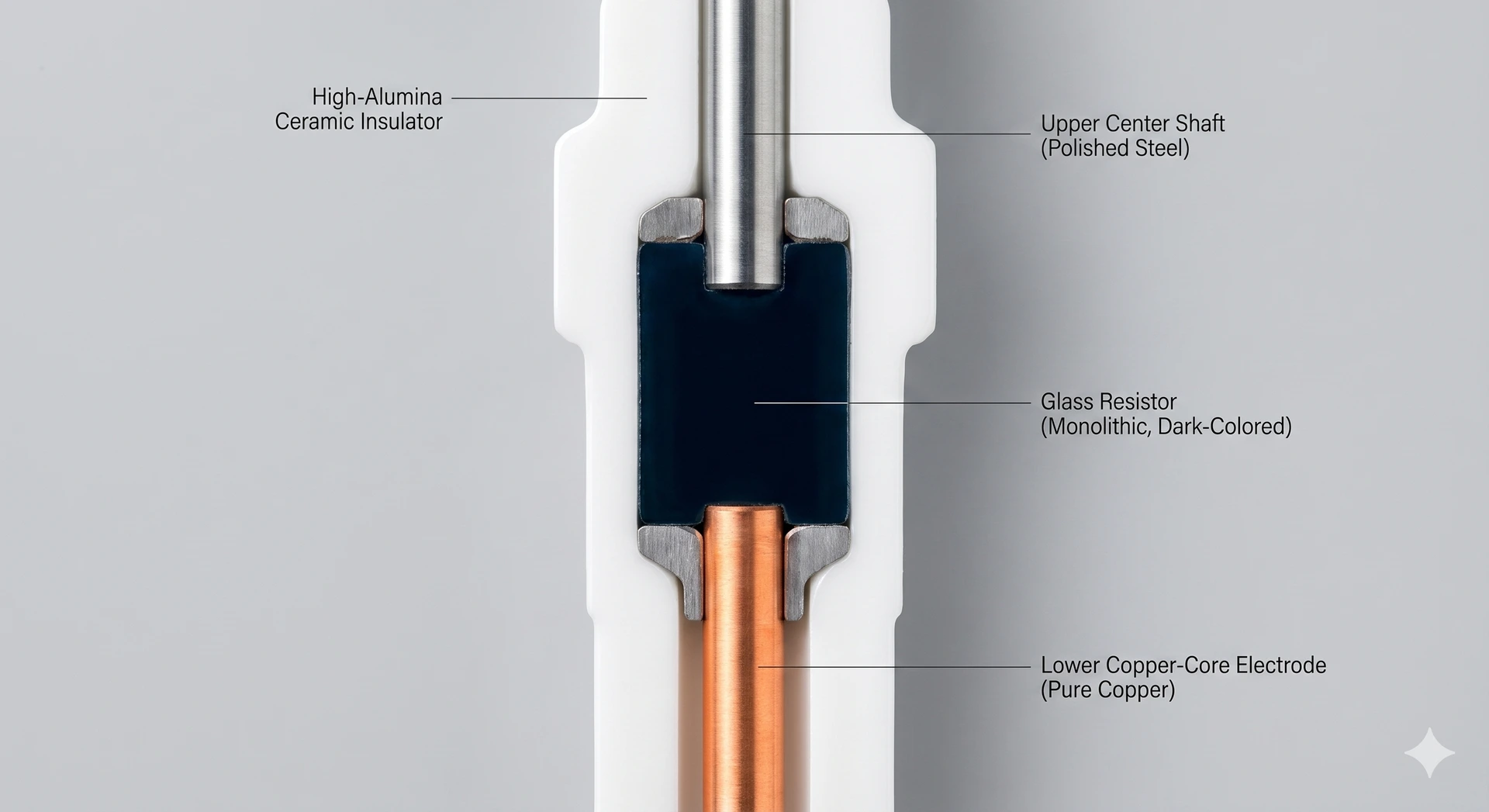
Modern shafts connect to a monolithic glass and copper powder resistor to suppress Electromagnetic Interference (EMI). Without this 5,000 to 10,000-ohm barrier, the chaotic electrical noise from the spark would disrupt your vehicle's sensitive Engine Control Unit (ECU).
According to automotive expert Wassim Bedwani, a failing internal resistor doesn't just hurt your radio signal; it forces your ignition system to work overtime. This added stress is a leading cause of premature failure in high-performance hardware like the best F-150 ignition coils, as the coil struggles to push voltage through a degraded internal circuit.
When an ignition system discharges tens of thousands of volts across an electrode gap, the resulting electrical arc emits a powerful, chaotic burst of electromagnetic radiation. According to automotive expert Wassim Bedwani, unsuppressed electrical noise will permanently disrupt sensitive engine control units (ECUs), electronic fuel injection systems, and onboard radio signals. To counteract this destructive interference, manufacturers insert a monolithic glass and copper powder resistor directly between the steel center shaft and the copper-core center electrode.
- Voltage Reception: The top metal terminal receives the raw, high-voltage surge directly from the ignition coil.
- Shaft Transmission: The solid steel center shaft carries the intense electrical current deep into the ceramic insulator body.
- Noise Suppression: The current passes through the integral glass resistor, which neutralizes harmful electromagnetic radio frequencies.
- Electrode Firing: The filtered, clean electrical current reaches the center electrode to powerfully ignite the fuel-air mixture.
How do manufacturers seal the center shaft against combustion pressure?
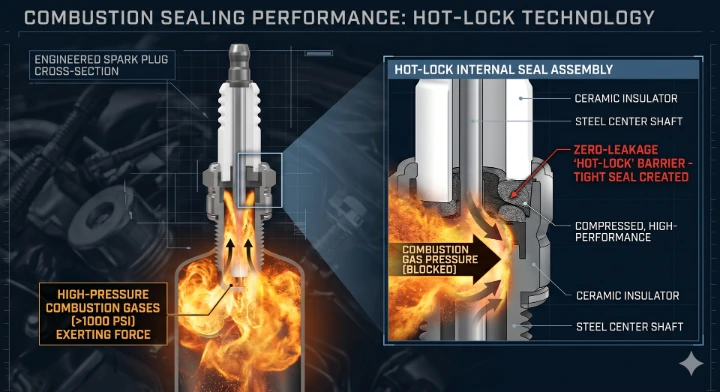
Manufacturers utilize a proprietary glass center seal and a high-temperature hot-lock assembly. This process fuses the steel shaft, resistor, and ceramic into a single, zero-leakage structure.
This seal must withstand cylinder pressures exceeding 1,000 psi. If it fails, combustion gases blow through the core, leading to catastrophic compression loss. Incorporating a visual inspection of your spark plug porcelain for "corona stain" or "blow-by" into your proactive maintenance checklist can save you from a complete engine seizure.
A modern internal combustion engine generates violent cylinder pressures exceeding 1,000 psi during the explosive power stroke. If the internal cavity housing the center shaft is not perfectly sealed, these extreme combustion gases will rapidly blow straight through the core of the spark plug. The vacuum-cemented center electrode and the fused glass seal physically block these highly pressurized gases. This robust structural integration protects the internal steel shaft from corrosive combustion byproducts. Furthermore, the perfect seal completely prevents catastrophic compression loss, ensuring the engine maintains maximum volumetric efficiency and power output.
How does the center shaft interact with the copper core for heat dissipation?
While the steel shaft handles electricity, a vacuum-cemented copper core inside the electrode manages the blistering 850C combustion heat. The copper acts as a heat sink, drawing thermal energy away from the tip.
This thermal balance is why material choice is so critical. For a deeper look at how different tips affect this heat transfer, see our comparison of Copper vs. Platinum vs. Iridium spark plugs.
A spark plug does not generate heat; it must actively remove heat to survive the blistering 850°C temperatures inside the combustion chamber. While the steel center stem is excellent for electrical transmission, standard spark plugs require a vacuum-cemented copper core buried inside the nickel-alloy center electrode to safely manage these thermal loads. Pure copper melts at a relatively low 1,085°C, making it entirely unsuitable for direct exposure to the brutal spark arc. By encapsulating the copper core inside a durable nickel, platinum, or iridium jacket, engineers allow the electrical current to flow freely from the center shaft while maintaining a highly efficient thermal pathway. This delicate thermal balance prevents the firing tip from overheating and triggering engine-destroying pre-ignition.
What happens if the internal center shaft or resistor fails?
A broken shaft or degraded resistor creates an immediate misfire, dumping unburned fuel into the exhaust. This isn't just a performance issue; it is the #1 reason for catalytic converter failure, as the raw fuel ignites inside the expensive honeycomb structure, melting the precious metals.
Extreme thermal cycling and constant high-voltage electrical stress will eventually degrade the internal glass resistor over tens of thousands of miles. When the internal resistance spikes far beyond the standard factory specification of 5,000 ohms, the ignition coil lacks the required power to push voltage through the center shaft. A highly degraded center shaft pathway forces the external ignition coil to operate at maximum capacity, which rapidly burns out the coil's internal copper windings. Because the center shaft and resistor are permanently sealed inside the ceramic insulator, they cannot be repaired. To restore engine performance, the mechanic must entirely replace the faulty spark plug assembly.
Summary Table: Internal Spark Plug Components
| Internal Component | Primary Material | Primary Engineering Function |
|---|---|---|
| Center Shaft (Stem) | Solid Steel Alloy | Transmits 40,000-volt electricity from the top terminal directly to the internal resistor. |
| Internal Resistor | Fused Glass & Copper Powder | Suppresses high-frequency electromagnetic interference (EMI) to protect vehicle computers. |
| Center Electrode Core | Pure Copper | Rapidly dissipates extreme combustion heat away from the firing tip into the cooling system. |
| Center Seal | Proprietary Hot-Lock Cement | Creates a zero-leakage barrier to prevent 1,000 psi combustion gases from escaping the cylinder. |
| Insulator | High-Alumina Ceramic | Electrically isolates the center shaft to prevent voltage from shorting out against the engine block. |
Frequently Asked Questions (FAQ)
Can a spark plug center shaft be repaired? No, a spark plug center shaft cannot be repaired. The steel shaft, internal resistor, and copper-core electrode are permanently fused inside the ceramic insulator using a high-temperature hot-lock assembly process. If the internal circuit breaks or the resistance spikes, you must replace the entire spark plug.
Why do spark plugs use a steel shaft instead of copper for the entire length? Manufacturers use a solid steel shaft for the upper length because steel provides exceptional mechanical strength and sufficient electrical conductivity to withstand intense engine vibrations. Copper is highly thermally conductive but mechanically soft; therefore, copper is strictly reserved for the core of the lower firing electrode to maximize heat dissipation.
What causes a spark plug resistor to wear out? A spark plug internal resistor wears out due to extreme thermal cycling and constant high-voltage electrical stress. Over millions of ignition cycles, the heat and 40,000-volt electrical arcs degrade the glass and copper powder mixture. This degradation drastically increases electrical resistance, ultimately leading to weak sparks and engine misfires.
Does the center shaft affect the spark plug's heat range? No, the steel center shaft does not dictate the spark plug's heat range. The heat range is determined entirely by the physical length and surface area of the lower ceramic insulator nose. The center shaft strictly functions as an electrical conduit, while the insulator and copper core manage thermal dissipation.
Recommended Spark Plugs & Installation Tools
To maintain the high-voltage integrity and thermal efficiency described in this article, using the correct hardware and precision tools is essential. Below are the top-rated components for modern ignition systems.
Category | Product Recommendation | Key Benefit Discover more
|
|---|---|---|
Premium Performance | Ultra-fine Iridium tip ensures high ignitability and durability under extreme heat. | |
OEM Reliability | Laser-welded platinum firing pin provides 3x the service life of standard copper plugs. | |
Precision Tooling | Protects the ceramic insulator during installation to prevent internal shaft fractures. | |
Electrical Safety | Prevents voltage leakage and keeps moisture out of the terminal connection. |
Installation Checklist
Verify Compatibility: Always use the "Your Garage" feature on Amazon to ensure the spark plug's heat range and thread pitch match your specific engine.
Gap Inspection: Even "pre-gapped" plugs should be checked with a precision feeler gauge to ensure the center shaft transmits current across the correct distance.
Torque Specs: Over-tightening can crush the internal seals; under-tightening leads to compression loss. Use a torque wrench whenever possible.
As an Amazon Associate, I earn from qualifying purchases. #ad
For a complete deep dive into choosing, diagnosing, and maintaining your entire ignition system, check out our ultimate Master Spark Plugs Guide.
Written by Wassim Bedwani — CEO & Founder, GE for Trading. Expert in Automotive Lubricants and Part Distribution.