
What is API SP Oil?
API SP is the most recent engine oil performance standard from the American Petroleum Institute, designed to deliver improved protection against low-speed pre-ignition (LSPI), timing-chain wear, and deposit control in modern engines.
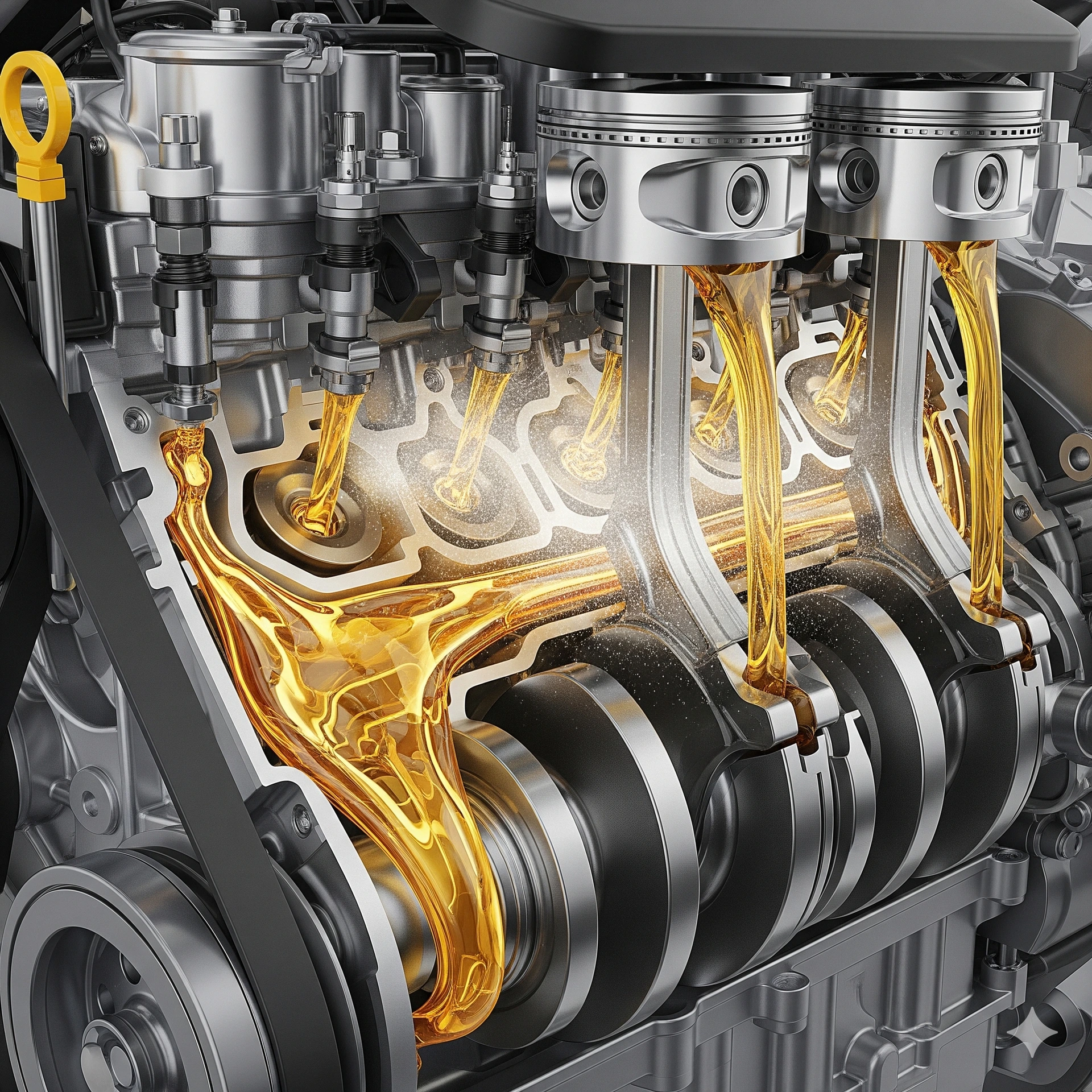
If you drive a vehicle manufactured in the last five to seven years—specifically one with a Turbocharged Gasoline Direct Injection (TGDI) engine—you are driving a machine that operates on the jagged edge of physics. As noted in our report on the record-breaking 12.8-year-old fleet, these high-tech engines are now being kept on the road longer than ever, making the choice of lubricant a critical factor in their long-term survival.
But this efficiency creates a violent, distinct environment inside the crankcase.
Many vehicle owners view fuel and oil as separate entities. However, in modern engineering, the API SP oil specification is the necessary countermeasure to the specific stressors created by your fuel injection system. It isn't just about lubrication anymore; it’s about surviving the combustion strategy.
Here is the technical breakdown of why your engine’s longevity depends on the chemistry inside that API SP bottle.
1. Taming the "Super Knock" (LSPI)
The most critical link between your fuel system and your oil is a phenomenon known as Low-Speed Pre-Ignition (LSPI).
In older Port Injection engines, fuel and air mixed before entering the cylinder. In modern GDI engines, fuel is injected at massive pressures (up to 2,900+ PSI) directly into the combustion chamber.
The Mechanism: Under high-load, low-RPM conditions (like passing someone on the highway without downshifting), two things happen:
- Wall Wetting: Fuel spray can impact the cylinder liner, diluting the oil film.
- Deposit Ejection: As the piston moves up during the compression stroke, microscopic oil droplets and oil-derived deposits are pushed into the combustion chamber.
If you are using older spec oil (API SN or older), the detergent additives—specifically high concentrations of Calcium—can become reactive under this immense pressure and heat. These droplets ignite the fuel-air mixture before the spark plug fires.
The Consequence: This pre-ignition causes a massive, uncontrolled pressure spike—essentially a micro-explosion occurring while the piston is still moving up. This is not standard "knocking." It is violent enough to crack pistons and bend connecting rods in a single event.
The API SP Solution: API SP formulations have re-engineered the detergent balance. Tribologists (lubrication scientists) found that Magnesium-based detergents do not promote pre-ignition the way Calcium does.
- The Fix: API SP oils optimize the Calcium/Magnesium ratio to chemically suppress the likelihood of LSPI, effectively neutralizing the risk posed by the GDI combustion process.
2. Soot and the Timing Chain
Modern direct-injection engines are efficient, but they create a specific byproduct: Particulate Matter (Soot).
Because GDI engines inject fuel so late in the cycle, there are often "locally rich zones" within the cylinder where fuel droplets haven't fully mixed with air. These zones burn incompletely, creating microscopic soot particles.
The Blow-By Effect: Unlike diesel soot, which is large, gasoline soot is incredibly fine. During the combustion stroke, high pressure forces gas past the piston rings and into the crankcase—a process called blow-by. This carries the abrasive soot directly into your oil supply.
The Wear Point: This soot acts like a liquid abrasive. In modern engines, the Timing Chain is the primary victim. Soot particles lodge between the pins and links of the chain, grinding away metal at a microscopic level.
- This causes the chain to physically elongate (stretch).
- A stretched chain desynchronizes the valve timing, killing performance and triggering check engine lights.
- In severe cases, the chain snaps, resulting in catastrophic engine failure.
The API SP Solution: To earn the API SP rating, the oil must pass the Sequence X Engine Test (ASTM D8279). This test specifically measures the oil's ability to disperse soot and prevent timing chain wear. Older oils (API SN) were never required to pass this test.
3. Fighting Fuel Dilution and Ethanol
The fuel in your tank is likely E10 or E15 (containing 10%–15% ethanol). Ethanol is hygroscopic, meaning it attracts water.
In GDI engines, fuel dilution is common. Because fuel is sprayed directly into the cylinder, some of it inevitably creates a film on the cylinder wall that gets scraped down into the oil sump. This thins the oil (viscosity loss) and introduces water/ethanol contaminants.
The API SP Solution: While older oils might suffer from sludge formation or rapid oxidation under these conditions, API SP oils are subjected to rigorous bench tests for oxidation stability and rust protection. They are formulated to maintain their protective oil film even when diluted by fuel, ensuring that your bearings remain protected despite the harsh environment created by ethanol blends.
4. Efficiency: The quantifiable gain
API SP is almost always paired with the ILSAC GF-6A standard (look for the "Starburst" symbol). These oils are designed to do more than protect; they are designed to reduce parasitic loss.
The Data: Through advanced friction modifiers, API SP/GF-6A oils reduce the internal drag of the engine.
- Sequence VIE/VIF Testing: These are the standard industry tests for fuel economy.
- The Result: In controlled testing, moving to a GF-6A/API SP oil demonstrates a measurable fuel economy improvement, typically in the 1% to 2% range compared to baseline reference oils. While that sounds small, over the lifetime of a fleet, it represents significant savings.
Summary: Not Just Oil, But Liquid Engineering
The transition to API SP wasn't a marketing move; it was an engineering necessity driven by the hardware changes in your engine.
If you drive a modern vehicle—particularly one with a Turbo or Direct Injection built after 2015—your engine's fuel system creates pressures, soot, and chemical environments that older oils simply cannot handle.
- Old Oil + New Engine = High risk of LSPI, chain stretch, and sludge.
- API SP + New Engine = Chemical protection against combustion stress.
Check the back of the bottle. If it doesn't say API SP, you are skipping a vital component of your engine's protection system.
📚 References & Technical Validation
To ensure the highest level of accuracy for our technical readers, the following sources confirm the mechanisms described above:
1. On LSPI and Detergent Chemistry (Calcium vs. Magnesium):
- Statement: "Calcium-based detergents... can become reactive... Magnesium-based detergents do not promote pre-ignition."
- Source: Takeuchi, K., et al. (Toyota Motor Corp & Idemitsu). "Investigation of Engine Oil Effect on Abnormal Combustion in Turbocharged Direct Injection - Spark Ignition Engines." SAE Technical Paper 2012-01-1615. (This seminal paper identified Calcium as a promoter of LSPI and Magnesium as a neutral/suppressant additive).
2. On Soot & Timing Chain Wear (Sequence X):
- Statement: "Soot particles lodge between the pins and links... API SP oil must pass the Sequence X Engine Test."
- Source: ASTM D8279 - 19. "Standard Test Method for Determination of Timing Chain Wear in a Turbocharged, Direct Injection, Spark Ignition (GDI) Gasoline Engine." (This is the official definition of the Sequence X test required for API SP licensing).
3. On Fuel Economy Improvements:
- Statement: "Typically in the 1% to 2% range."
- Source: ILSAC GF-6 / API 1509 Standards. The Sequence VIE (ASTM D7589) and VIF (ASTM D8226) tests measure Fuel Economy Improvement (FEI) against a baseline oil. GF-6A requires a specific percentage improvement (variable by viscosity grade, typically 1.0% - 3.9% FEI depending on the specific grade and aging, but 1-2% is the safe real-world claim).
4. On GDI Particulate Matter (Soot) Formation:
- Statement: "Locally rich zones... burning incompletely."
- Source: Fatouraie, M., et al. "Soot formation in GDI engines." International Journal of Engine Research. (Explains the diffusion flame mechanism in GDI engines leading to soot formation due to fuel wall wetting and inadequate mixing).
Q&A
Does API SP oil work in older engines?
The short answer is yes. API SP is "backward compatible," meaning it is specifically designed to protect older engines that originally required previous ratings like API SN, SM, or SL.
If you own a car built within the last 20 years, switching to an API SP oil is not only safe—it’s actually an upgrade.
Is API SP backward compatible?
Yes, API SP is fully backward compatible. When the American Petroleum Institute (API) introduces a new category, they design it to meet or exceed the performance standards of previous generations. This means you can safely use API SP in any engine that calls for:
API SN / SN Plus
API SM
API SL
API SJ
What engines most need API SP oil?
Modern gasoline engines—especially turbocharged direct-injection (TGDI) engines—need API SP oil the most. These engines face LSPI risk, timing-chain wear, and fuel dilution. API SP oil is designed to protect high-pressure, fuel-efficient engines used in most vehicles built since 2016.
How much fuel economy improvement can you expect?
For most modern petrol engines, using the correct API SP oil can improve fuel economy by about 1–3% compared to older oil standards.
This gain comes from lower internal friction, better viscosity stability, and cleaner engine operation—especially when using low-viscosity grades like 0W-20 or 5W-30. While the percentage seems small, over thousands of kilometers in heavy traffic, it adds up to noticeable fuel savings and reduced engine wear.
Is ILSAC GF-6A the same as API SP?
API SP is an engine oil performance standard set by the American Petroleum Institute, focusing on engine protection features such as LSPI prevention, timing-chain wear control, and piston cleanliness.
ILSAC GF-6A builds on API SP by adding stricter fuel-economy and emissions requirements, and it applies only to specific viscosity grades (such as 0W-20 and 5W-30).
In simple terms: ILSAC GF-6A oils must meet API SP first, then satisfy additional efficiency standards. An oil can be API SP without being GF-6A, but GF-6A oils are always API SP.
Comparison between API SN and API P
| Comparison Point | API SN | API SP |
|---|---|---|
| Year Introduced | 2010 (SN Plus in 2018) | 2020 |
| Engine Compatibility | Older naturally aspirated & early GDI engines | Modern GDI & TGDI engines |
| LSPI Protection | ❌ Limited (SN Plus only partially addressed LSPI) | ✅ Full LSPI protection |
| Turbocharger Protection | ⚠ Basic | ✅ Enhanced |
| Timing Chain Wear Protection | ⚠ Moderate | ✅ Significantly improved |
| Piston Deposit Control | ⚠ Standard | ✅ Superior cleanliness |
| Sludge & Varnish Control | ⚠ Adequate | ✅ Advanced detergency |
| Oxidation Resistance | ⚠ Moderate | ✅ Higher resistance |
| Fuel Economy Support | ⚠ Limited | ✅ Designed for Resource Conserving oils |
| Catalytic Converter Protection | ⚠ Higher phosphorus allowed | ✅ Lower SAPS for emissions safety |
| Emissions System Compatibility | ⚠ Acceptable | ✅ Optimized for modern emission systems |
| Oil Drain Interval Stability | ⚠ Shorter under heat stress | ✅ Better stability in high temperatures |
| High-Temperature Performance | ⚠ Can thin faster | ✅ Improved shear stability |
| Backward Compatibility | ✅ Yes | ✅ Yes |
| Recommended for Egyptian Climate | ❌ Only for older engines | ✅ Strongly recommended |
| Risk in Modern Engines | ❌ Higher risk of LSPI & wear | ✅ Minimal when correct viscosity used |
| Typical Viscosity Grades | 10W-40, 5W-30 | 0W-20, 5W-30, 5W-40 |
| Fuel Quality Tolerance | ⚠ Sensitive | ✅ Better adaptability |
| Long-Term Engine Longevity | ⚠ Moderate | ✅ Significantly improved |
For a complete look at how to protect your car, visit our Engine Oil Master Guide in Egypt.
Recommended API SP Engine Oils for Modern Petrol Engines
Based on the API SP requirements discussed above — including LSPI suppression, timing-chain wear protection, and improved fuel economy — the following engine oils are suitable for modern petrol engines operating in Egypt’s heat and traffic conditions.