
1. Two Main Worlds: Mechanical vs. Electric Fuel Pumps
The evolution of the automotive industry has created two distinct types of fuel supply systems. Depending on the age and performance of your car, you likely have one of the following:
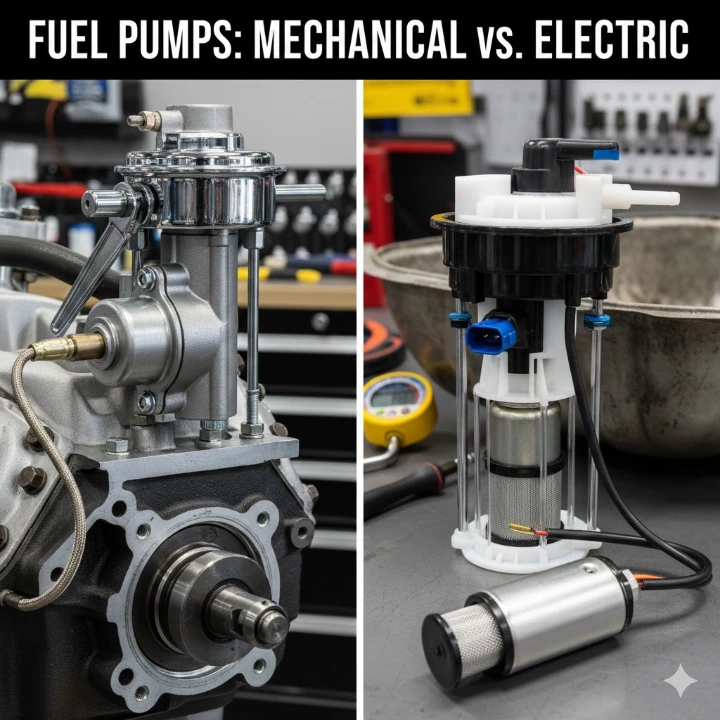
Mechanical Fuel Pumps (The Classic Choice)
Location: Bolted directly to the engine block or cylinder head.
How it works: It uses a diaphragm and lever mechanism driven by the engine’s camshaft. As the engine rotates, the lever moves, creating suction that pulls fuel from the tank.
Best for: Older, carbureted engines. They are simple, durable, and don't require electrical power, but they operate at low pressures (4–7 PSI).
Electric Fuel Pumps (The Modern Standard)
Location: Usually mounted inside the fuel tank (In-tank) or along the fuel line (Inline).
How it works: An electric motor drives an impeller or turbine to push fuel at high pressure (30–60+ PSI) toward the engine.
Best for: Modern fuel-injected (MPFI or GDI) systems. They are quieter, more efficient, and provide the precise fuel flow needed for computer-controlled engines.
2. Component Spotlight: Individual Pump vs. Complete Assembly
When shopping for spare parts, you must choose between replacing the "motor" or the entire "assembly."
| Feature | Electric Pump (Motor Only) | Complete Fuel Pump Assembly |
| What's included? | Just the internal electric motor. | Motor, strainer, housing, and sending unit. |
| Pressure Control | Relies on existing external regulators. | Often includes a built-in pressure regulator. |
| Fuel Gauge | Does NOT include the level sensor. | Includes the float/sending unit for the fuel gauge. |
| Installation | High labor; requires rebuilding the old unit. | "Plug and Play"; much faster to install. |
| Reliability | Risky; old filters or seals may fail soon. | Highly Recommended; all components are new. |
3. The 7 Warning Signs of a Failing Fuel Pump
A fuel pump rarely dies without warning. According to industry experts at Primary Care Auto, watch for these symptoms:
Whining Noise: A loud, high-pitched whining or howling from the fuel tank area.
Difficulty Starting: The engine cranks longer than usual because the pump can’t build pressure quickly.
Engine Sputtering: Especially at high speeds or under a heavy load, indicating fuel starvation.
Stalling at High Temps: If your pump is dying, it may overheat, causing the car to stall until it cools down.
Loss of Power: Notable when driving uphill or towing; the pump can't keep up with the increased fuel demand.
Surging: The vehicle feels like it’s "racing" or picking up speed randomly because the pump is sending inconsistent fuel.
Gas Mileage Decrease: A failing relief valve or pump can lead to inefficient fuel delivery, forcing you to visit the gas station more often.
4. Why Do They Fail?
Running on Empty: Gasoline acts as a coolant for electric pumps. Driving with less than 1/4 tank allows the pump to suck in air and overheat.
Contamination: Rust and dirt in the tank act like sandpaper on the pump’s internal gears.
Electrical Faults: Damaged wiring, loose terminals, or a blown fuel pump relay can prevent the pump from receiving steady 12V power.
5. Q&A: Frequently Asked Questions
Q: Can I upgrade from a mechanical to an electric fuel pump? A: Yes! Many classic car owners do this to prevent "vapor lock" and ensure faster starts. However, you will need to install a fuel pressure regulator to ensure the high pressure of the electric pump doesn't overwhelm your carburetor.
Q: How many fuel pumps does a car have? A: Most standard cars have one. However, modern Direct Injection (GDI) cars have two: a low-pressure "lift pump" in the tank and a mechanical "high-pressure pump" on the engine.
Q: Where is the fuel filter located? A: In modern assemblies, the primary filter (strainer) is attached to the bottom of the pump inside the tank. Some cars also have an "inline" filter located along the frame rail under the car.
Q: Is it better to have an in-tank or inline electric pump? A: In-tank pumps are superior for daily drivers because they stay cooler and are much quieter. Inline pumps are often used in custom racing builds where accessibility is the priority.
Our Collection of Fuel Pumps
Check out what's new in our company !
Pro-Tip for Blog Readers:
When replacing your fuel pump, always check the fuel pump relay and fuse first. Sometimes a "dead pump" is actually just a $10 electrical part that stopped working!