
In the era of high-tech combustion, the humble spark plug has evolved from a simple "igniter" into a precision-engineered component that can make or break your engine’s efficiency. Whether you are hauling a trailer through the Rockies in a V6 truck or navigating stop-and-go traffic in a modern hybrid, your choice of spark plug directly impacts your wallet at the gas pump and your vehicle's lifespan.
As we move through 2026, the US automotive market is dominated by GDI (Gasoline Direct Injection) and turbocharged engines. These systems demand a spark that is not only powerful but incredibly resilient. In this 1,500-word guide, we break down the science of ignitability to help you find the perfect match for your engine.
1. The Performance Hierarchy: Which Type Wins?
When US drivers talk about "performance," they usually mean two things: throttle response and horsepower consistency. To achieve this, the spark plug must minimize "quenching"—the process where the metal of the plug steals heat from the flame kernel.
Copper: The Short-Lived King of Conductivity
Copper plugs have the best thermal conductivity, but in 2026, they are mostly relegated to older race cars or vintage V8s. Their low melting point means they wear out in as little as 20,000 miles. For modern performance, we look to noble metals.
Iridium: The Industry Standard
Iridium is 6x harder and 8x stronger than platinum, allowing for a "fine-wire" center electrode (often 0.6mm). This focuses the spark like a laser, requiring less voltage from your ignition coils. This is the "set it and forget it" performance choice for 100,000 miles.
Ruthenium HX: The 2026 Performance Leader
As discussed in our deep-dive on Ruthenium vs. Iridium, Ruthenium is the new apex predator. It offers superior oxidation resistance and is the only plug engineered to handle the high-pressure "Super Knock" environments of turbocharged engines. If you want the absolute best throttle response available today, Ruthenium is the answer.
2. How to Choose the Right Spark Plug for a V6 Engine
V6 engines are the workhorses of the US—found in everything from the Ford F-150 EcoBoost to the Toyota Tacoma and Jeep Grand Cherokee. Choosing a plug for a V6 requires balancing two different worlds: Torque and Fuel Economy.
Step 1: Check the Aspiration (Turbo vs. Naturally Aspirated)
If your V6 is turbocharged (like the Ford 3.5L EcoBoost), you must use a high-heat resistant plug like Iridium or Ruthenium. Turbocharged V6s generate massive internal cylinder pressure that can literally "blow out" a weak spark. For more on this, see our Guide to Turbocharged Engine Protection.
Step 2: Understand the Heat Range
A V6 in a minivan and a V6 in a towing truck have different "Heat Ranges."
Towing/Hauling: You may need a "Colder" plug to dissipate heat faster and prevent pre-ignition.
City Commuting: A "Standard" heat range prevents carbon fouling during short trips.
Step 3: The Gap Factor
In the US, many V6 engines come from the factory with a specific gap (e.g., .030 or .044 inches). Never assume a plug is "pre-gapped" perfectly. Always use a feeler gauge to ensure the gap matches your vehicle's emissions sticker under the hood.
3. Best Brands for Maximum Fuel Efficiency
If your goal is to maximize MPG (Miles Per Gallon) and reduce emissions—especially important if you’ve already optimized your oil purity with GTL Technology—these three brands lead the market in Ignitability.
NGK (The Innovation Leader)
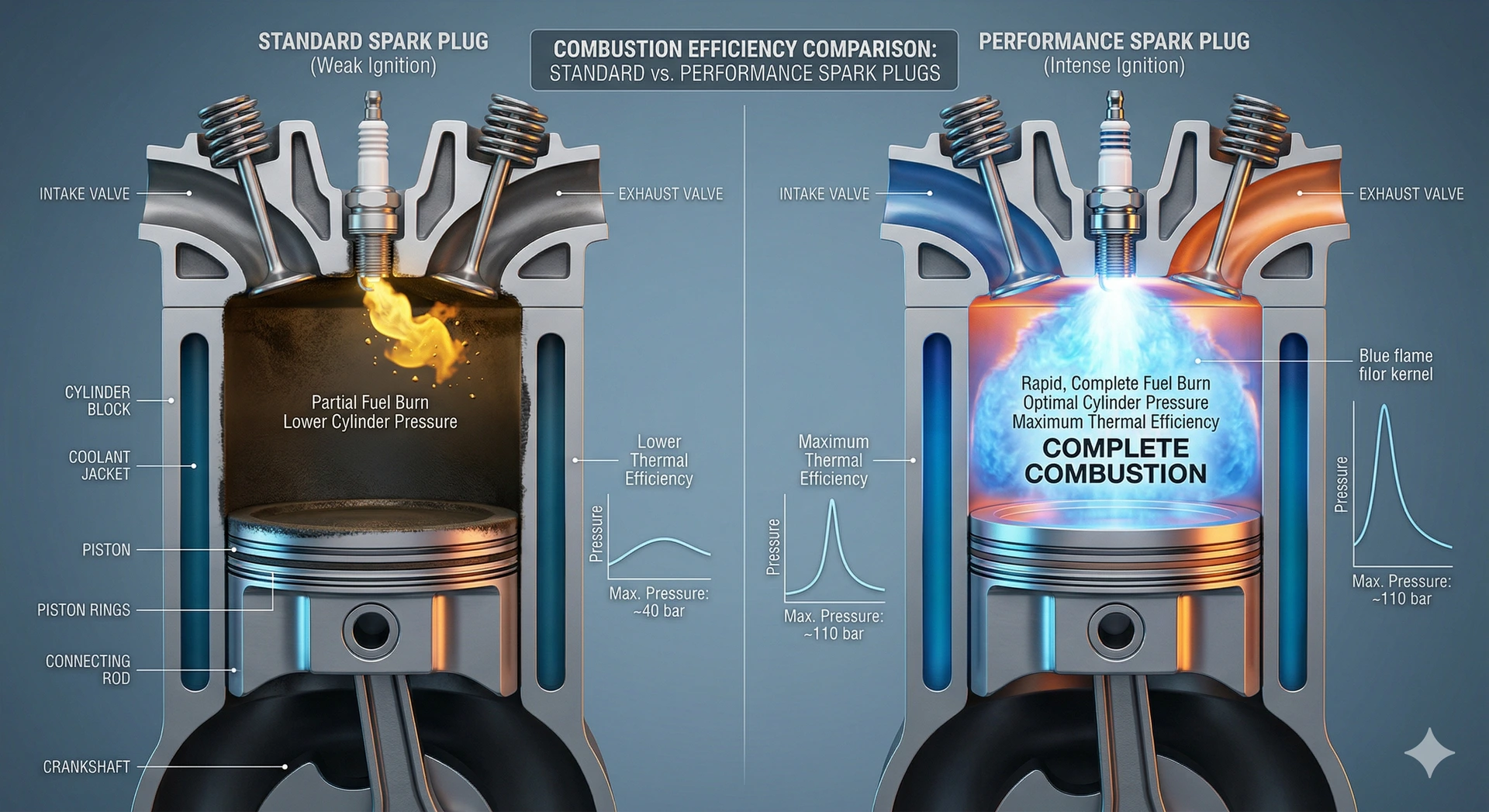
NGK’s Ruthenium HX and Laser Iridium lines are designed for "Complete Combustion." By ensuring every drop of fuel is burned, NGK helps US drivers claw back lost fuel economy caused by carbon buildup.
Denso (The Precision Specialist)
Denso pioneered the 0.4mm Iridium tip—the thinnest in the world. This requires the absolute lowest voltage to fire, which reduces the load on your alternator and ignition system, indirectly contributing to better fuel efficiency.
Bosch (The European Efficiency Master)
Bosch Double Iridium plugs are the gold standard for German-engineered V6s. Their 360-degree continuous laser welding ensures the precious metal stays put, maintaining a perfect gap for the entire life of the plug.
🛒 Top Spark Plug Picks on Amazon USA
1. For Modern V6 & Turbo Engines: NGK Ruthenium HX
The highest-rated plug for 2026. Perfect for GDI engines prone to fouling.
2. Best for High-Mileage V6 Trucks: NGK Laser Iridium
The OEM choice for many Ford, GM, and Toyota V6 engines. Reliable for 100k miles.
3. Best for Fuel Efficiency & Hybrids: Bosch Double Iridium
Unbeatable longevity and consistent firing for start-stop hybrid engines.
🛒 Check Price on Amazon: Bosch Double Iridium
As an Amazon Associate, GE for Trading earns from qualifying purchases. This means we may receive a small commission at no extra cost to you if you use the links below to support our expert research.
4. Summary Comparison Table
| Feature | Copper/Nickel | Double Platinum | Iridium / Ruthenium |
| US Lifespan | 20k - 30k Miles | 60k - 80k Miles | 100k - 120k Miles |
| Performance | High (but fades fast) | Moderate | Ultimate (Consistent) |
| Fuel Efficiency | Low (due to gap growth) | Moderate | High (Complete Burn) |
| Best For | Pre-1990 Vehicles | Mid-2000s Sedans | Modern V6, Turbo & GDI |
| Cost over 100k miles | High (5x changes) | Moderate (2x changes) | Lowest (1x change) |
5. Expert Q&A: US Driver FAQ
Q: My V6 engine is "shaking" at red lights. Could it be the plugs?
A: Yes. This is often a "Rough Idle" caused by a misfire. In a V6, if one plug is fouled, the engine becomes unbalanced. Replacing them with high-ignitability Iridium plugs often smooths the engine immediately. Refer to our Glossary entry on Misfires for more.
Q: Do I need to change my ignition coils when I change my plugs?
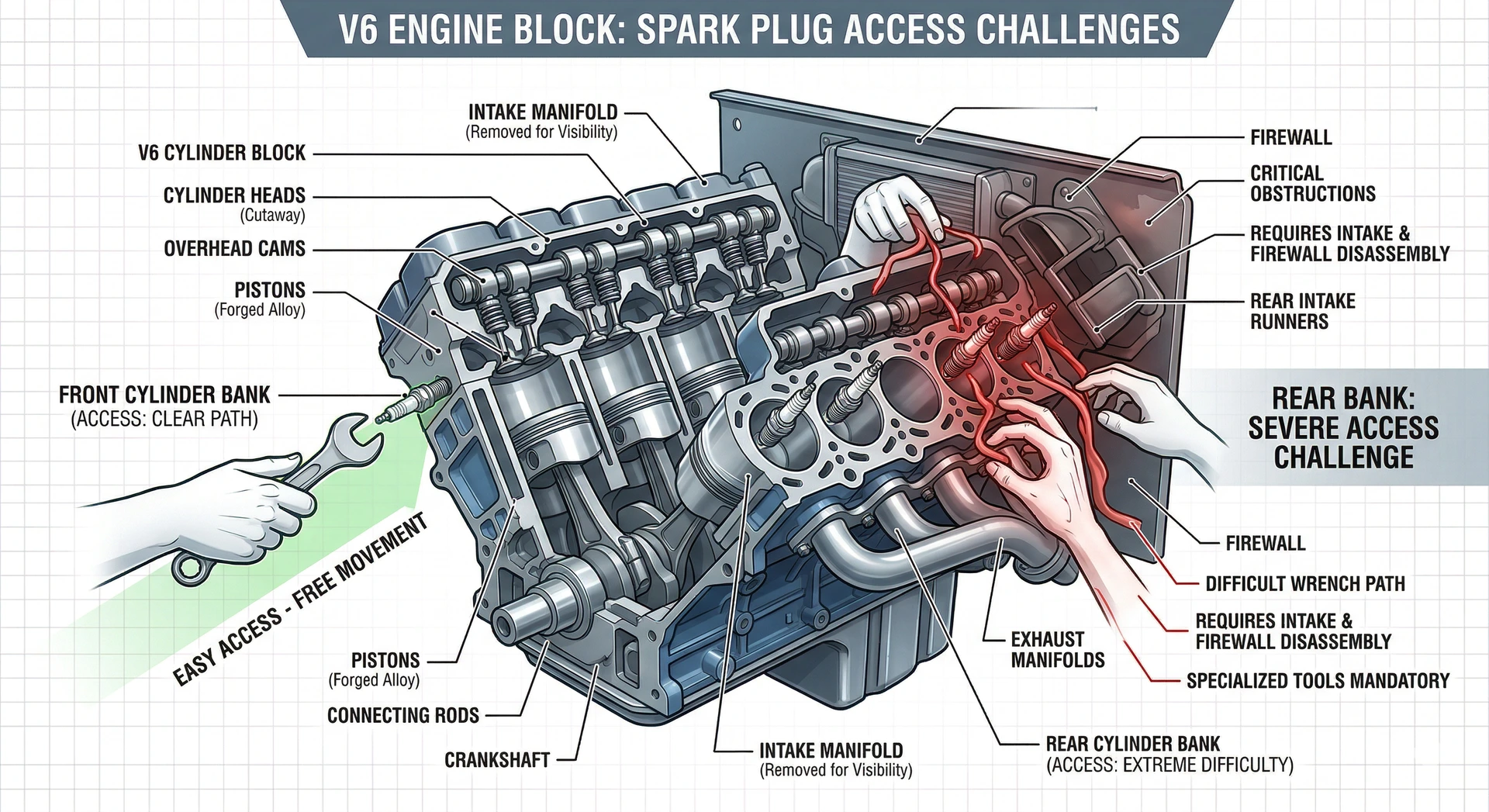
A: Not necessarily. However, on a V6, the "back three" plugs are often hard to reach. Many US mechanics recommend changing the coils at the same time to save on labor costs if you are already over 100,000 miles.
Q: Will performance plugs void my car's warranty?
A: No. As long as the plug meets the manufacturer's heat range and thread specifications, you are protected by the Magnuson-Moss Warranty Act in the US.
For a complete deep dive into choosing, diagnosing, and maintaining your entire ignition system, check out our ultimate Master Spark Plugs Guide.