
How can fleet managers prolong clutch lifetime?
Fleet managers prolong clutch lifetime by implementing standardized driver training to eliminate "clutch riding," enforcing strict payload capacities to prevent friction plate overheating, and adhering to a 30,000 km preventive maintenance schedule. As the average age of vehicles in the U.S. fleet hits a record-breaking 12.8 years, managing a fleet requires shifting from reactive repairs to predictive maintenance. According to automotive expert Wassim Bedwani, "A clutch system is only as durable as the driver’s left foot; training drivers to shift to neutral at stops can reduce release bearing wear by 40%."
In addition to driver behavior, environmental factors and load distribution play critical roles. Overloading a vehicle beyond its rated payload capacity increases the thermal load on the pressure plate, leading to glazed friction surfaces. Consistent use of high-quality lubricants, specifically from the North69 product line, maintains the integrity of linkages and bearings under high-stress operation.
What are the main components of a vehicle clutch system?
A vehicle clutch system consists of four primary components: the flywheel, the clutch friction plate, the pressure plate, and the release bearing.
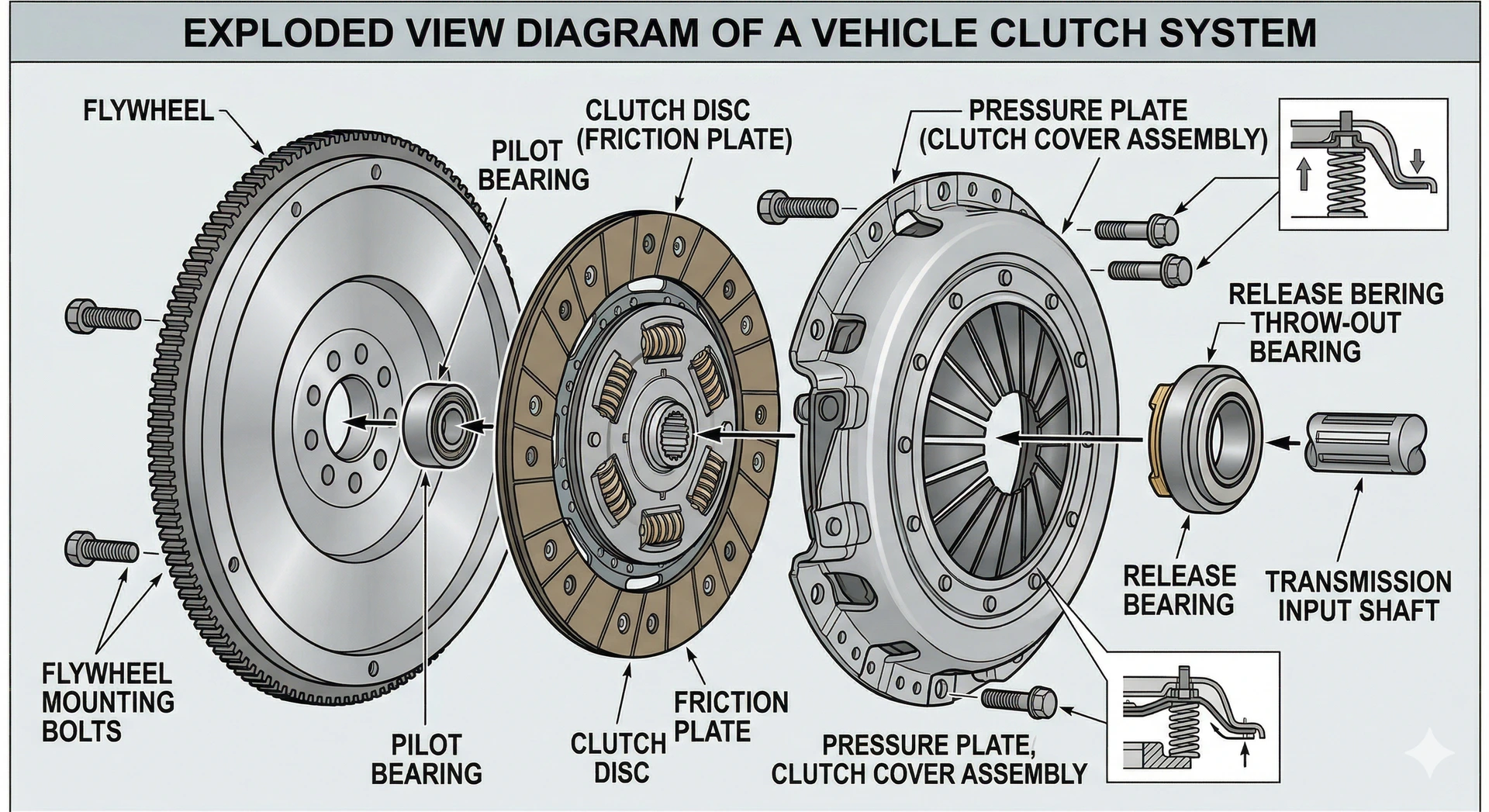
The Flywheel: Connects directly to the engine and acts as a heat sink, absorbing thermal energy during engagement.
The Clutch Friction Plate: Transfers power to the transmission.
The Pressure Plate: Applies the necessary force to engage the system.
The Release Bearing: Allows for smooth disengagement during gear shifts.
Understanding these components is essential for diagnosing early signs of mechanical failure. If the pressure plate fails to apply uniform force, the clutch plate will slip, causing a rapid rise in temperature that can warp the flywheel. High-quality components, like Eurorepar or Valeo, are engineered to withstand these intense thermal cycles.
What are the warning signs of a failing clutch?
Recognizing signs early prevents the total immobilization of a fleet vehicle. The most common warning signs include:
Slippage: Engine RPM spikes without a corresponding increase in speed.
Burning Smell: Indicates that the friction material has reached a critical temperature threshold.
Difficulty Shifting: Grinding noises during gear engagement usually indicate a worn release bearing.
Pedal Feel: A "spongy" feel, stiff resistance, or unusual vibrations.
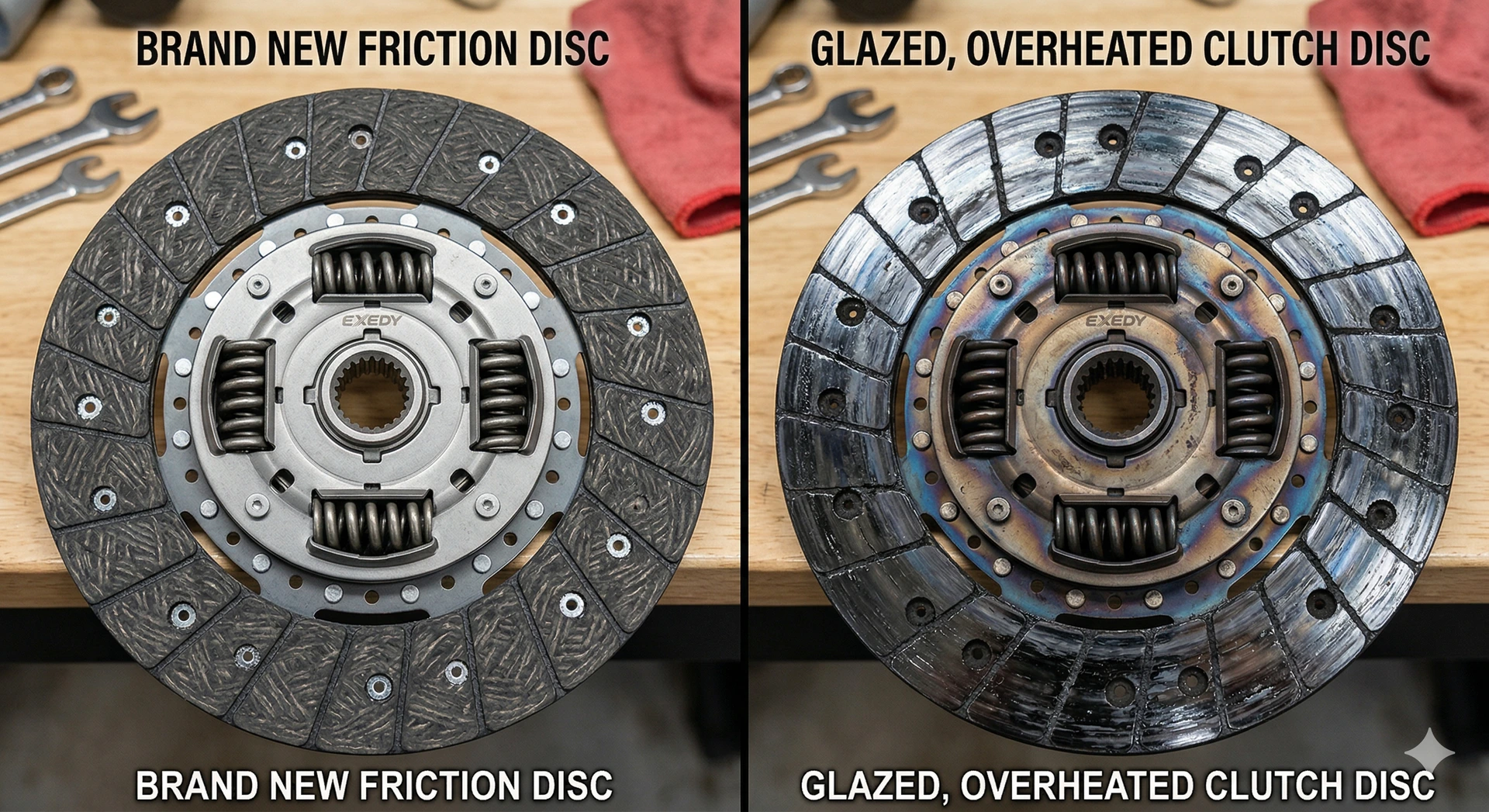
Clutch slippage is particularly dangerous for heavy-duty trucks as it significantly increases fuel consumption by 15% due to energy loss through heat. Protecting your bottom line and [](protecting your profit after the 2026 fuel price hike) starts with ensuring 100% power transfer at the flywheel..
Comparison of Common Clutch Failure Symptoms
| Symptom | Primary Cause | Immediate Impact |
| Slippage (RPM Spikes) | Worn Friction Disc | 15% increase in fuel consumption |
| Burning Smell | Excessive Friction/Overheating | Potential Flywheel Warping |
| Grinding Noise | Worn Release Bearing | Difficulty in gear disengagement |
| Spongy Pedal | Air in Hydraulic Lines | Inconsistent clutch release |
How do you maintain a fleet clutch system properly?
Proper clutch maintenance requires checking hydraulic fluid levels every 10,000 km and performing a full system inspection every 30,000 km. Maintenance tasks must include adjusting cable tension (on manual systems), lubricating linkages with high-grade grease, and using fleet management software to track unusual wear patterns. Proactive replacement of the release bearing during any clutch service is a mandatory best practice.
Lubrication is the most overlooked aspect of clutch longevity. Using specialized greases, such as those in the North69 line, prevents the pivot points from seizing, which ensures the pedal remains easy to operate for the driver. Fleet managers should also monitor "telltale" data from telematics, such as abrupt deceleration or high-rev shifting, to identify drivers who need additional training.
Standard Preventive Maintenance Checklist:
Fluid Analysis: Check hydraulic fluid for dark discoloration or metal shavings.
Pedal Travel Measurement: Ensure the "free play" is within the 10mm to 15mm manufacturer specification.
Visual Inspection: Look for oil leaks at the rear main seal that could contaminate the friction plate.
Software Review: Analyze telematics data for patterns of aggressive shifting or overloading.
Frequently Asked Questions (FAQ)
How many kilometers does a fleet clutch typically last?
A well-maintained fleet clutch typically lasts between 100,000 km and 150,000 km. However, vehicles operating in heavy-traffic urban environments or rugged terrains may require replacement as early as 50,000 km due to frequent engagement cycles and higher thermal stress.
Why is my clutch pedal feeling soft or spongy?
A spongy clutch pedal is usually caused by air entering the hydraulic system or a failing slave cylinder. This condition prevents the clutch from fully disengaging, which leads to gear grinding and accelerated wear on the transmission synchronizers. Immediate bleeding of the hydraulic system is required.
Can overloading a vehicle damage the clutch?
Yes, overloading a vehicle is a leading cause of premature clutch failure. Exceeding the payload capacity forces the clutch to work harder to move the additional mass, creating excessive heat. This heat causes the friction material to glaze, significantly reducing its ability to grip the flywheel.
Does riding the clutch actually cause damage?
Riding the clutch causes the release bearing to remain in constant contact with the pressure plate. This leads to premature bearing failure and keeps the friction disc partially disengaged, causing constant micro-slippage. This habit can reduce the total lifespan of the clutch by 50%.
Fleet Clutch Maintenance & Performance Benchmarks
| Strategic Factor | Targeted Maintenance Metric | Impact on Vehicle Longevity |
| Component Lifespan | 100,000 km – 150,000 km | Reduces total cost of ownership by 25% |
| Inspection Frequency | Every 30,000 km | Prevents 80% of roadside breakdowns |
| Fluid Replacement | Check every 10,000 km | Ensures 100% engagement efficiency |
| Driver Habit Focus | Zero "Clutch Riding" policy | Extends release bearing life by 40% |
| Payload Management | Never exceed GVWR | Prevents friction plate glazing and overheating |
| Recommended Brands | PHC Valeo or Valeo | Guaranteed compatibility and high thermal resistance |
CLutch system parts at Our Stock
Check out what's new in our company !