
Steel and Survival: How Spark Plug Shells Withstand Combustion Pressures
The spark plug metal shell withstands violent combustion pressures exceeding 2,000 psi by utilizing [](precisely machined, high-strength steel alloys). This outer jacket physically anchors the spark plug into the engine block while simultaneously sealing the combustion chamber.
As the average vehicle in the U.S. is now being kept for a record 12.8 years, the structural integrity of this steel casing is what prevents the intense pressure generated during the explosive power stroke from violently ejecting the spark plug from the cylinder head.
According to automotive expert Wassim Bedwani, the spark plug operates in the most destructive environment within an engine. The metal shell serves as the structural foundation, absorbing thermal shocks that fluctuate between 500C and 850 C. Furthermore, the shell acts as the definitive electrical ground for the 40,000-volt ignition spark, which arcs directly to the ground strap welded to the bottom of the casing.
Furthermore, the metal shell acts as the definitive electrical ground for the 40,000-volt ignition spark. High-voltage electricity travels down the internal center electrode and violently arcs directly to the ground strap welded to the bottom of the steel shell. Manufacturers heavily engineer this steel casing to survive millions of explosive pressure cycles without suffering from mechanical fatigue or structural deformation. Maintaining the integrity of this outer shell guarantees flawless engine performance and prevents catastrophic horsepower loss.
How do spark plug threads prevent combustion gas leaks?
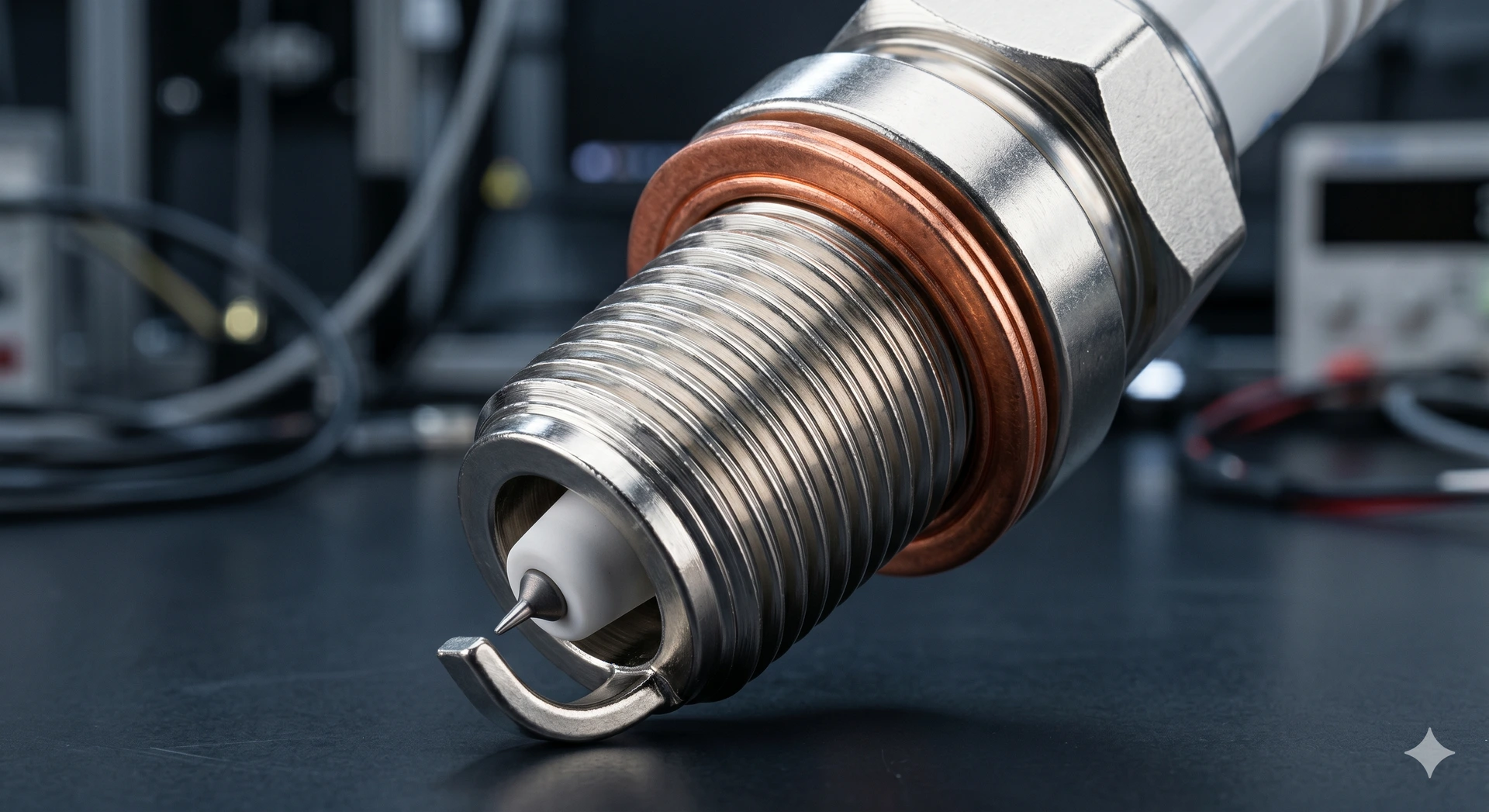
Spark plug threads prevent leaks by utilizing a specialized cold-rolling manufacturing process. Cold-rolled threads feature an uninterrupted metal grain structure that provides maximum tensile strength.
Engine manufacturers specify precise torque requirements to ensure the threads stretch slightly for a flawless mechanical lock. If these threads fail or the shell cracks, you must diagnose engine misfires like a pro to identify if combustion gases are escaping through the cylinder head. Mechanics must always install plugs using a calibrated torque wrench to guarantee the threaded shell achieves an absolute zero-leakage seal.
Cold-rolling the steel threads physically hardens the metal surface, actively preventing thermal cycle fatigue and dangerous thread seizure. If a manufacturer used weak, physically cut threads, the constant extreme thermal expansion and contraction of the aluminum engine block would quickly destroy the spark plug housing. Mechanics must always install spark plugs using a calibrated torque wrench to guarantee the threaded shell achieves an absolute zero-leakage seal against the cylinder head.
What is the hot-lock assembly process in a spark plug?
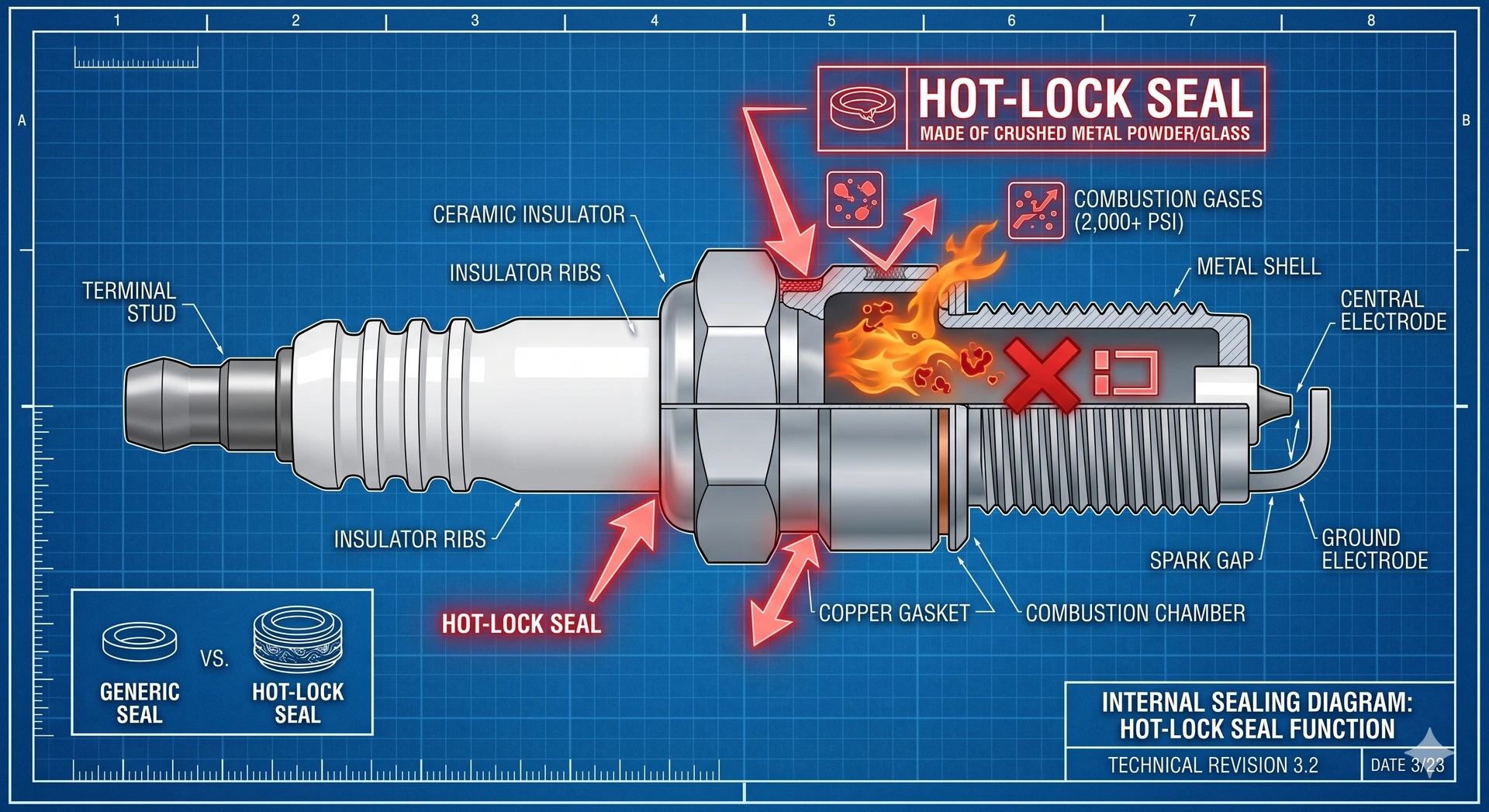
The hot-lock assembly process is a high-temperature manufacturing technique used to permanently fuse the delicate high-alumina ceramic insulator inside the rigid steel shell. Engineers heat the metal shell until it expands, insert the ceramic core, and crush the metal housing together under extreme mechanical pressure. As the steel cools, it shrinks and creates an impenetrable, zero-leakage barrier.
Modern engines generate violent explosive forces that actively try to push the ceramic insulator straight up and out of the metal shell. To combat this physical threat, manufacturers rely on the hot-lock assembly procedure to guarantee absolute structural integrity. During manufacturing, proprietary sealing powders or talc rings are inserted directly between the ceramic insulator and the outer steel shell. The factory machinery applies massive pressure while simultaneously heating the steel jacket to lock the components together.
This deliberate thermal deformation physically anchors the ceramic core permanently into place. According to aviation engineering standards, this hot-lock seal actively resists the high pressure of combustion gases and completely prevents 2,000 psi cylinder pressure from blowing by the internal components. If this critical internal seal fails, highly pressurized exhaust gases will escape straight through the core of the spark plug, causing a catastrophic loss of engine compression and an immediate engine failure.
Why are spark plug shells plated with zinc or nickel?
Spark plug shells are plated with bright nickel or zinc-chromate coatings to provide absolute corrosion protection against corrosive engine gases, moisture, and extreme road salt. This sacrificial chemical plating strictly prevents the steel threads from rusting and permanently seizing inside the expensive aluminum cylinder head over the lifespan of the spark plug.
The exterior of a spark plug is constantly exposed to harsh atmospheric conditions, while the interior threads face a barrage of toxic, unburned hydrocarbons and acidic moisture. Bare steel oxidizes and rusts incredibly fast under these severe operating environments. To guarantee long-term durability and ease of mechanical maintenance, leading global ignition manufacturers electroplate the entire outer metal shell.
According to NGK Spark Plugs, this specialized trivalent plating provides exceptional resistance against moisture and harsh chemicals. The slick nickel coating acts as a highly effective, built-in anti-seize release agent. Mechanics should never apply liquid anti-seize lubricants to a nickel-plated spark plug, as the dense fluid artificially alters torque values by up to 20 percent. Over-torquing a lubricated spark plug will severely stretch the metal shell, distort the internal heat transfer characteristics, and ultimately destroy the aluminum cylinder head threads.
Summary Table: Spark Plug Shell Components and Functions
| Shell Component | Primary Material | Primary Engineering Function |
|---|---|---|
| Outer Jacket (Shell) | High-Strength Steel Alloy | Withstands 2,000 psi combustion pressures and secures the plug into the cylinder head. |
| Mounting Threads | Cold-Rolled Steel | Provides maximum tensile strength to prevent thermal fatigue and mechanical shearing. |
| Surface Plating | Trivalent Nickel or Zinc-Chromate | Prevents thread seizure and provides extreme resistance against chemical corrosion. |
| Internal Hot-Lock Seal | Crushed Steel and Sealing Powder | Creates a zero-leakage barrier to prevent high-pressure exhaust blow-by. |
| Ground Electrode (Strap) | Nickel-Chrome Alloy | Provides the definitive electrical ground path for the 40,000-volt ignition spark. |
How do you identify high-quality spark plug shells on Amazon USA?
You identify high-quality spark plug shells on Amazon USA by inspecting the precision of the cold-rolled threads, the brightness of the nickel plating, and the precise welding of the ground strap. Purchasing genuine, brand-name ignition components from verified sellers guarantees your engine receives a metal shell capable of safely withstanding 2,000 psi combustion pressures.
Global automotive analysts warn that third-party online marketplaces are heavily flooded with dangerous, highly convincing counterfeit spark plugs. Fake spark plugs utilize cheap, unplated steel shells and poorly machined cut threads that rapidly strip out inside the hot engine block. Counterfeit manufacturing operations completely skip the critical hot-lock assembly process, guaranteeing catastrophic combustion gas leaks, melted electrodes, and severe engine misfires.
Consumers shopping on Amazon USA must exclusively use the "Amazon Confirmed Fit" tool by entering their exact vehicle make, model, and engine specifications to ensure safe thread compatibility. Shoppers must carefully verify that the product label explicitly states "Ships from and sold by Amazon.com" or a highly rated authorized distributor to actively avoid fake automotive parts. By purchasing authentic spark plugs, drivers ensure their ignition system features a heavy-duty steel shell designed to survive extreme thermal shock.
Top Recommended Spark Plugs on Amazon USA:
- Bosch 9752 (YR7SII302U) OE Fine Wire Iridium: Features a heavily nickel-plated steel shell featuring a 360-degree continuous laser-welded ground electrode. This robust metal jacket guarantees optimal heat dissipation and perfectly secures the ultra-fine wire iridium tip under maximum cylinder pressure.
- NGK CR9EIX Iridium IX: Utilizes a proprietary trivalent metal plating on the steel shell to completely eliminate the need for anti-seize lubricants. This powersports-specific plug features precision cold-rolled threads designed to survive the violent, high-vibration environment of modern motorcycle and ATV engines.
- Denso Iridium TT: Features a highly durable, machine-rolled threaded shell and an advanced twin-tip design. The heavy-duty steel casing perfectly houses the copper-core ground electrode, maximizing thermal conductivity and preventing the metal shell from overheating during extended highway driving.
- Autolite Iridium XP: Engineered with an enhanced, corrosion-resistant steel jacket specifically built to withstand the extreme 2,000 psi pressures generated by modern turbocharged and direct-injected (GDI) engines. The high-strength shell guarantees absolute compression retention.
As an Amazon Associate, GE for Trading earns from qualifying purchases. This means we may receive a small commission at no extra cost to you if you use the links below to support our expert research.
Frequently Asked Questions (FAQ)
Can a spark plug shell break inside the engine? Yes, a spark plug metal shell can physically shear and break off inside the cylinder head if a mechanic applies excessive torque during installation or removal. Over-tightening stretches the cold-rolled steel beyond its tensile limit, severely weakening the jacket and requiring expensive machine-shop extraction to repair the engine block.
Why do marine spark plugs use zinc-chromate plating? Marine spark plugs utilize a double-dipped, zinc-chromate plated steel shell to aggressively combat the extreme saltwater corrosion present in marine environments. This thick, heavy-duty plating actively prevents the spark plug threads from rapidly rusting and permanently fusing to the outboard engine's aluminum cylinder head.
Does the metal shell affect the spark plug heat range? Yes, the metal shell plays a critical role in the spark plug's overall heat range. The shell acts as the primary thermal bridge, physically transferring intense 850°C combustion heat directly from the ceramic insulator into the cylinder head and engine cooling system to prevent catastrophic pre-ignition.
Should I use anti-seize on spark plug threads? No, you should never apply anti-seize lubricant to modern spark plugs that feature a shiny, silver trivalent nickel plating. The specialized metal plating already acts as a factory-applied release agent. Adding wet lubricants artificially alters installation torque values by 20 percent, causing mechanics to over-tighten and stretch the metal shell.
For a complete deep dive into choosing, diagnosing, and maintaining your entire ignition system, check out our ultimate Master Spark Plugs Guide.
Written by Wassim Bedwani — CEO & Founder, GE for Trading. Expert in Automotive Lubricants and Part Distribution.