
For nearly two decades, Iridium has been the undisputed king of the spark plug world. It was the "forever" plug—the one you installed and forgot about for 100,000 miles. But as we move deeper into 2026, the automotive landscape has shifted. Modern engines are smaller, hotter, and under more pressure than ever before due to Turbocharging and Gasoline Direct Injection (GDI).
Enter Ruthenium HX. This isn't just a minor marketing upgrade; it is a fundamental shift in precious metal technology designed to solve the problems that Iridium is finally starting to struggle with. In this 1,500-word deep dive, we break down the science, the performance, and the ROI to help you decide: is it time to upgrade to Ruthenium?
1. The Iridium Legacy: Why it Ruled the Road
To understand the future, we have to respect the past. Iridium was introduced to solve the "melting problem" of platinum and copper plugs. With a melting point of approximately 2,466°C, Iridium allowed for much finer center electrodes (0.6mm).
The Benefits were clear:
Extreme Durability: Able to withstand 100k+ miles without significant gap erosion.
Low Voltage Requirement: The fine tip concentrates the electrical spark, making it easier for the ignition coil to fire.
Corrosion Resistance: Excellent stability against the chemical onslaught inside a combustion chamber.
However, Iridium has one weakness: Brittleness. While it handles heat well, it can struggle with the violent pressure waves found in modern high-boost turbocharged engines.
2. The Ruthenium Revolution: What is it?
Ruthenium is a noble metal belonging to the platinum group. While it has been used in specialized industrial applications for years, NGK pioneered its use in automotive spark plugs with the Ruthenium HX series.
Why Ruthenium?
The "HX" stands for High Ignitability. Ruthenium is more stable at higher temperatures than Iridium and possesses superior oxidation resistance. In a 2026 engine, where combustion temperatures are pushed to the limit to reduce emissions, Ruthenium remains structurally "tougher" than Iridium.
3. Ignitability and the "Quenching" Effect
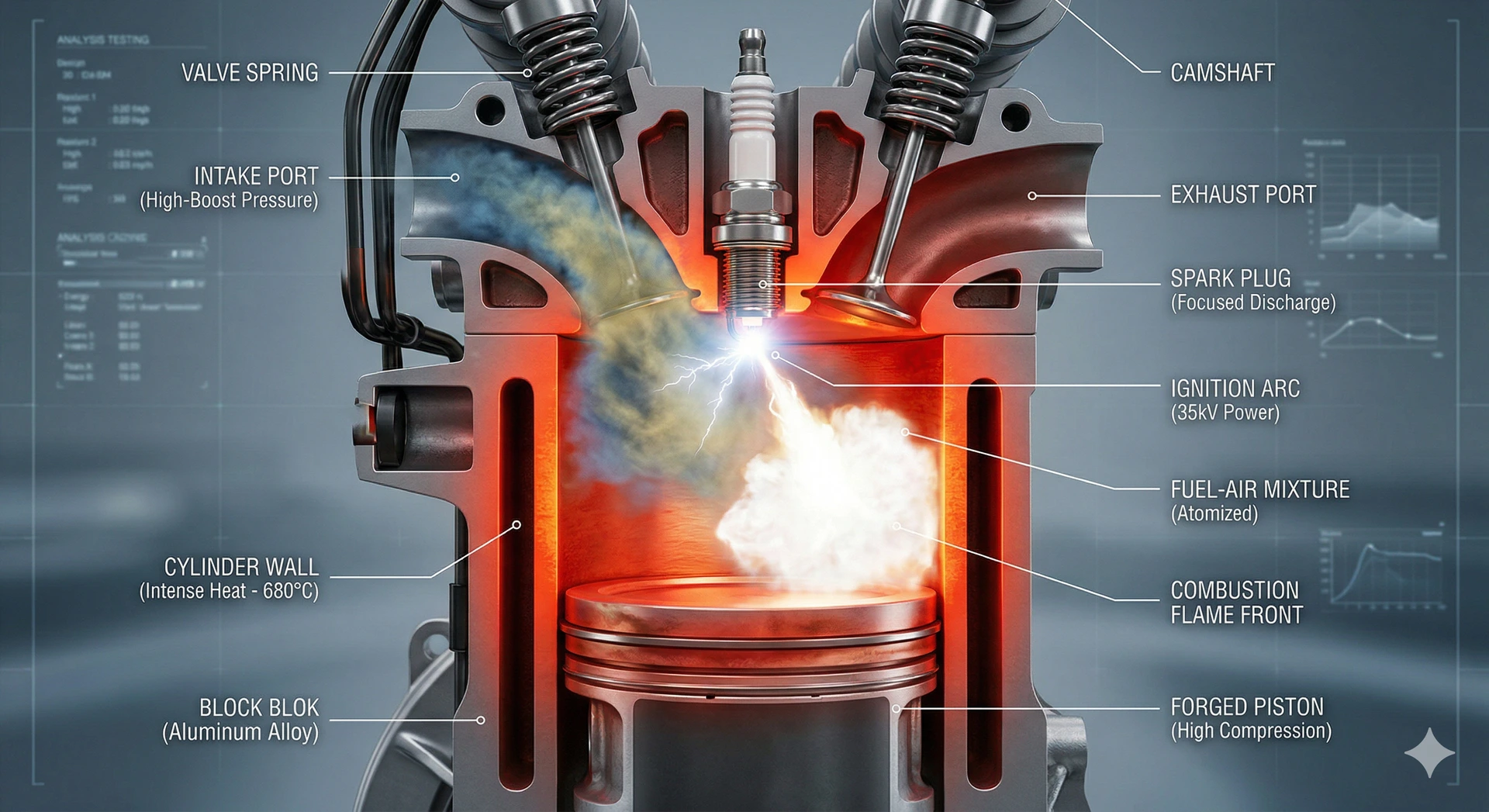
The primary goal of a spark plug is to start a fire. But a spark plug is also a "heat sink"—it can actually steal heat away from the tiny flame kernel it just created. This is called Quenching.
Iridium plugs use a standard fine-wire tip to reduce quenching.
Ruthenium HX plugs utilize specialized tip designs (like the DFE - Double Fine Electrode or PSPE - Projected Square Platinum Electrode).
These designs project the spark further into the combustion chamber and minimize the metal-to-flame contact. This results in a faster, more complete "burn," which leads to better throttle response and more consistent idling.
4. The Turbo & GDI Factor: Why 2026 Engines Need More
If you drive a modern car with a Turbocharger or GDI (Gasoline Direct Injection), your spark plugs are under constant attack. These engines are prone to LSPI (Low-Speed Pre-Ignition)—the same "silent killer" we discussed in our Guide to Turbocharged Engine Protection.
Ruthenium plugs are specifically engineered to resist carbon fouling in GDI engines. Because GDI engines spray fuel directly into the cylinder, the spark plug is often "washed" in fuel, which can lead to deposits. Ruthenium’s thermal properties allow it to reach its "self-cleaning" temperature faster than Iridium, preventing the misfires that plague high-mileage GDI vehicles.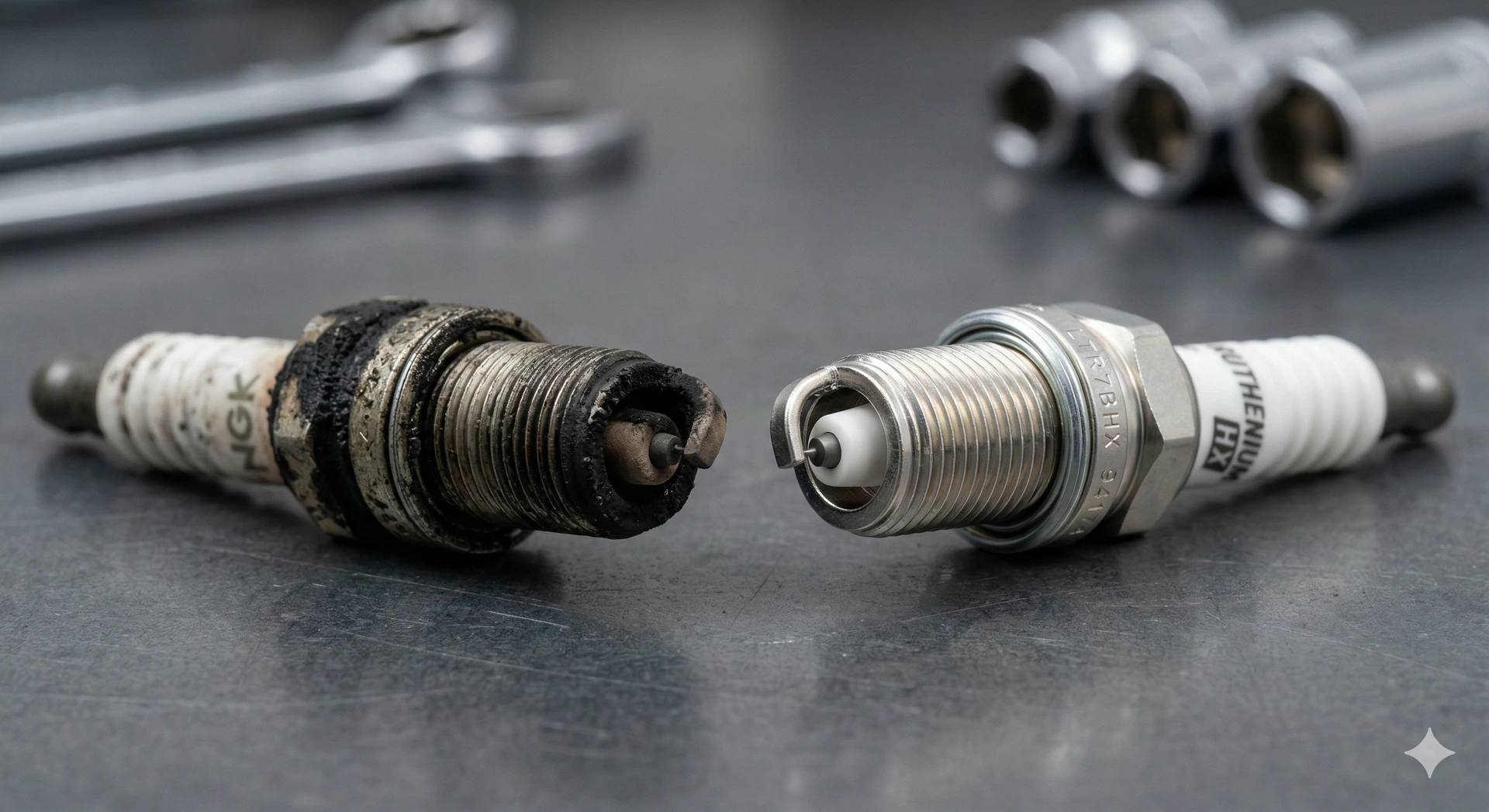
5. Fuel Economy (MPG) and Emissions
For the US driver, MPG is king. A more efficient spark means less wasted fuel. In independent testing, Ruthenium plugs have shown a measurable improvement in 0-60 mph times and a slight but consistent increase in fuel economy compared to standard Iridium.
By ensuring a more complete combustion cycle, you are also putting less stress on your Catalytic Converter and GPF (Gasoline Particulate Filter)—terms you can find in our Master Engine Oil Glossary.
🛒 The Best Spark Plugs on Amazon USA
1. The Performance Leader: NGK Ruthenium HX
The absolute best choice for modern engines (2015+). If your car is turbocharged, this is a non-negotiable upgrade.
Best for: Ford EcoBoost, Honda VTEC Turbo, VW/Audi TSI.
2. The Reliable Standard: NGK Laser Iridium
If you have a naturally aspirated Toyota or Honda and want the 100,000-mile reliability the factory intended, this is your plug.
Best for: Toyota Camry, Honda Accord, Lexus.
3. The High-Value Alternative: Denso Iridium Power
Denso offers a 0.4mm center electrode—the world's thinnest—for those looking for the absolute lowest ignition voltage.
Best for: Older performance cars and DIYers on a budget.
🛒 View on Amazon USA: Denso Iridium Power
As an Amazon Associate, GE for Trading earns from qualifying purchases. This means we may receive a small commission at no extra cost to you if you use the links below to support our expert research.
6. Comparison Table: Ruthenium vs. Iridium
| Feature | Iridium Spark Plugs | Ruthenium HX Spark Plugs |
| Melting Point | High (~2,466°C) | Highest (~2,334°C + Better Stability) |
| Longevity | 80k - 100k Miles | 100k - 120k Miles |
| Ignitability | Excellent | Ultimate (High-Explosive Spark) |
| Fouling Resistance | Good | Superior (Ideal for GDI/Turbo) |
| Best For | Standard Commuting | Turbos, GDI, & Performance Driving |
| Cost | Mid-Range | Premium |
7. Expert Q&A: Making the Choice
Q: Can I put Ruthenium plugs in an older car?
A: Yes! Ruthenium is backward compatible. If your car calls for Iridium or Platinum, Ruthenium will offer a cleaner burn and better cold starts. For more on "Backward Compatibility" in automotive tech, check our latest guide here.
Q: Are Ruthenium plugs worth the extra $2-$4 per plug?
A: For modern cars, yes. The savings in fuel economy and the protection against carbon fouling far outweigh the $16 extra you spend on a 4-cylinder engine.
For a complete deep dive into choosing, diagnosing, and maintaining your entire ignition system, check out our ultimate Master Spark Plugs Guide.