
Engine oil is the lifeblood of your vehicle, but how long does it really last? The answer isn’t as straightforward as you might think. From driving habits to the type of oil you use, several factors can dramatically impact its lifespan. What if we told you that changing your oil too soon could be wasting money, while waiting too long could destroy your engine? Let’s dive into the secrets of engine oil longevity and uncover the truth you need to know.
1. Manufacturer Recommendations: The Starting Point
Your vehicle’s owner’s manual holds the first clue. Most manufacturers recommend oil changes every 5,000 to 7,500 miles for conventional oil and 7,500 to 10,000 miles for synthetic oil. But here’s the twist: some modern cars with advanced oil monitoring systems can go even longer. Are you following the manual, or are you risking costly repairs by ignoring it?
2. Conventional vs. Synthetic Oil: The Lifespan Showdown
Not all oils are created equal. Conventional oil typically lasts 3,000 to 5,000 miles, while synthetic oil can stretch to 7,500 to 15,000 miles. But wait—there’s more. High-performance synthetic blends and high-mileage oils add another layer of complexity. Are you using the right oil for your engine, or are you leaving performance and protection on the table?
3. Driving Conditions: The Silent Oil Killer
Did you know that your driving habits could be cutting your oil’s lifespan in half? Severe conditions like stop-and-go traffic, short trips, extreme temperatures, and towing heavy loads can accelerate oil degradation. If you’re driving in these conditions, you might need to change your oil far more often than the standard recommendation. Is your driving style secretly sabotaging your engine?
4. Oil Monitoring Systems: The High-Tech Lifesaver
Many modern vehicles come equipped with an Oil Life Monitoring System (OLMS). This advanced technology tracks your engine’s performance, driving conditions, and oil quality to determine the perfect time for an oil change. But here’s the catch: not all drivers trust it. Are you relying on guesswork, or are you letting your car’s smart system do the heavy lifting?
---
5. Oil Analysis: The Ultimate Test
For those who want to know exactly when to change their oil, laboratory analysis is the gold standard. By testing for viscosity breakdown, contaminants, and additive depletion, you can pinpoint the perfect time for an oil change. But is this level of precision necessary for the average driver, or is it overkill?
6. Visual and Sensory Checks: The DIY Approach
Sometimes, your senses can tell you everything you need to know. Fresh oil is amber and translucent, but over time, it turns dark and sludgy. If your oil smells burnt or feels gritty, it’s a clear sign it’s time for a change. Are you paying attention to these warning signs, or are you risking engine damage by ignoring them?
7. Time-Based Changes: The Overlooked Factor
Even if you barely drive your car, engine oil doesn’t last forever. Over time, it absorbs moisture and breaks down chemically, losing its protective properties. Most experts recommend changing your oil at least once a year, regardless of mileage. Are you letting time silently degrade your oil?
The Bottom Line: When Should You Change Your Oil?
The lifespan of your engine oil depends on a combination of factors: the type of oil, your driving conditions, and your vehicle’s technology. By following manufacturer recommendations, using the right oil, and staying alert to your car’s needs, you can maximize engine performance and avoid costly repairs.
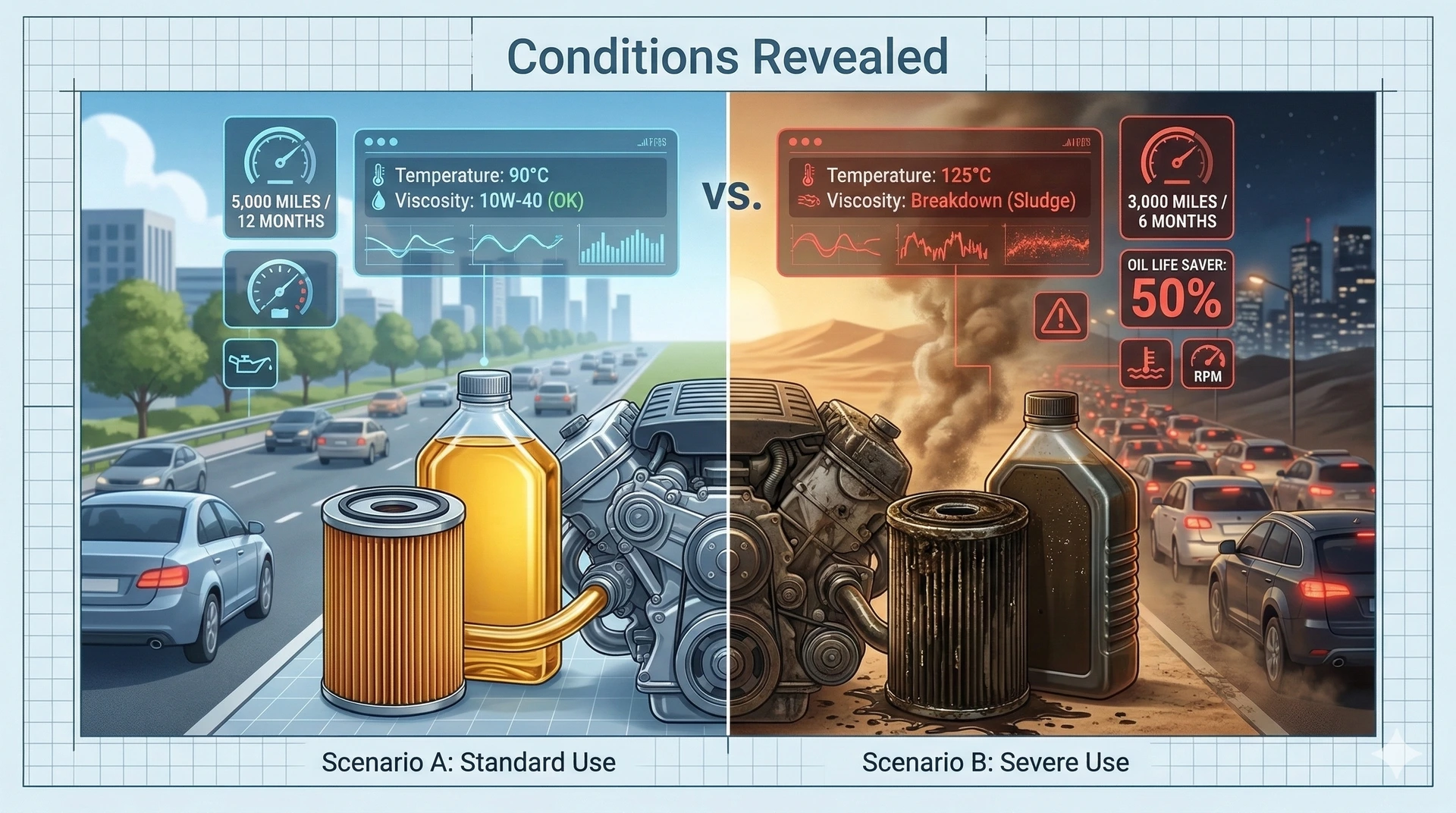
But here’s the real question: Are you giving your engine the care it deserves, or are you gambling with its lifespan? The truth is out there now it’s up to you to act.
Summary Table
| Oil Factor / Condition | Conventional Oil | Full Synthetic Oil | Key Action / Advice |
| Standard Mileage | 3,000 – 5,000 miles | 7,500 – 15,000 miles | Always check your vehicle's owner manual for the baseline recommendation. |
| Time Limit | Max 12 months | Max 12 months | Change at least once a year, even if you haven't hit the mileage limit. Oil degrades over time. |
| Severe Driving Conditions | Lifespan drops significantly | Lifespan drops significantly | Stop-and-go traffic, extreme heat, and heavy towing require faster oil change intervals. |
| Visual / Sensory Check | Amber (New) / Sludgy (Old) | Amber (New) / Sludgy (Old) | Change immediately if the oil feels gritty to the touch or has a burnt smell. |
| Oil Life Monitor (OLMS) | Follow Dashboard Alerts | Follow Dashboard Alerts | Trust your modern vehicle's computer—it tracks driving habits, not just miles. |
2. Frequently Asked Questions (Q&A)
(Add this section toward the bottom of your article, right before the conclusion. Using an "Accordion" block in Odoo for these questions looks great and saves space!)
Q: How often should I change my engine oil if I don't drive my car very much?
A: Even if your car sits in the garage and you barely accumulate mileage, you should change your engine oil at least once a year. Over time, engine oil naturally breaks down chemically and absorbs moisture from the air, which strips away its protective lubricating properties.
Q: Is upgrading to synthetic oil really worth the extra cost?
A: Absolutely. While conventional oil typically only lasts 3,000 to 5,000 miles, premium synthetic oil can safely protect your engine for 7,500 to 15,000 miles. Synthetic oil also resists high-temperature breakdown much better, making it the smartest choice for the hot Egyptian climate and heavy traffic.
Q: What exactly counts as "severe" driving conditions?
A: "Severe" driving doesn't just mean racing. It includes common daily habits like stop-and-go Cairo traffic, frequent short trips (where the engine doesn't fully warm up), driving in extreme heat or dusty environments, and towing heavy loads. If this sounds like your commute, you need to change your oil more frequently.
Q: Can I actually trust my car's digital Oil Life Monitoring System (OLMS)?
A: Yes! Modern OLMS technology is highly advanced. Instead of just counting miles, the computer actively tracks your engine temperature, driving hours, idle time, and driving habits to calculate the exact remaining life of your oil.
Q: How can I check my own oil at home to see if it's bad?
A: Pull out your engine's dipstick and do a visual and sensory check. Fresh oil is translucent and amber-colored. If the oil is thick, dark, and sludgy, it’s old. Furthermore, if you rub the oil between your fingers and it feels gritty, or if it has a strong burnt smell, you need an oil change immediately.
This article is part of our Engine Oil Master Guide in Egypt—your definitive resource for engine protection.